



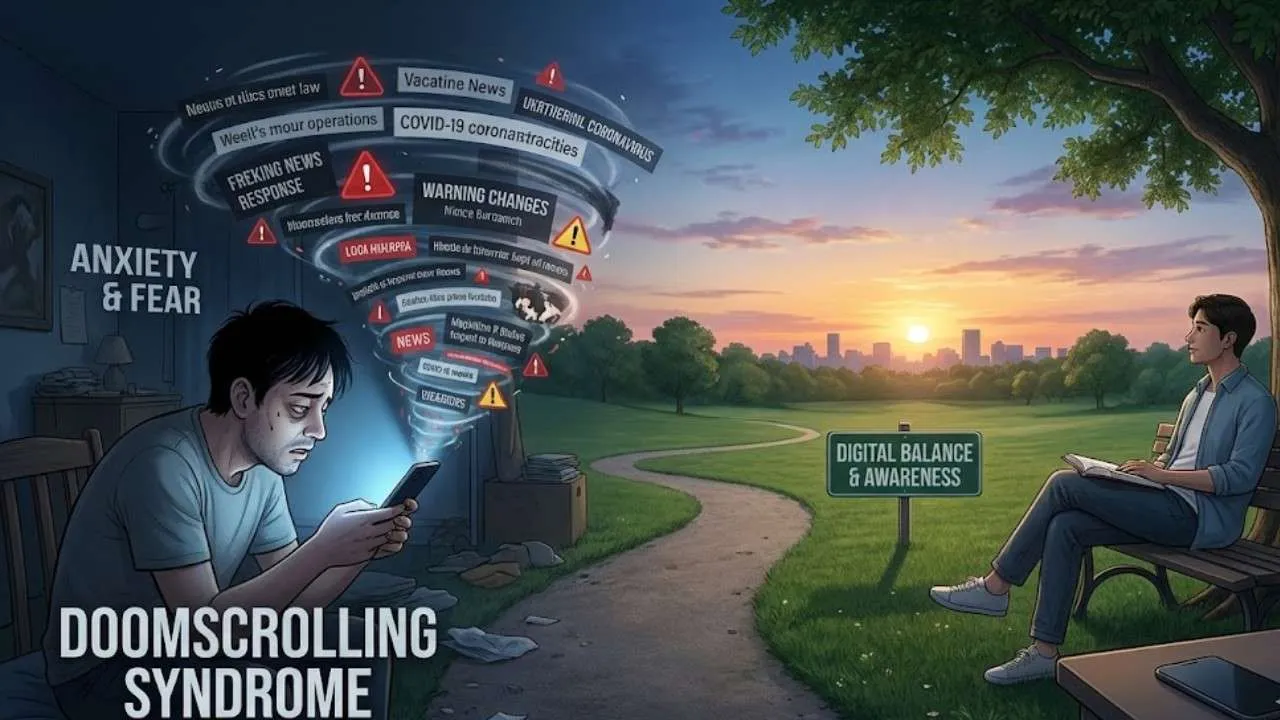
Doomscrolling means continuously scrolling negative news on the phone. The term became popular during the COVID period. People stayed indoors and consumed more digital content. Bad news increased fear and anxiety. Phones made this habit easy. Social media apps show endless content. News updates refresh every second. The brain keeps searching for more information. This creates mental stress. Doctors observed that people felt tired without physical work. Doomscrolling syndrome is not a medical disease. It is a behavioural pattern. Mental health experts now study it seriously due to its wide impact.
Why The Human Brain Gets Trapped In Doomscrolling
The human brain is designed to notice danger. In ancient times, this helped survival. Today, phones use this same response. It is a fact that negative news grabs attention faster. And it is much much faster than positive stories. Algorithms promote content that keeps users engaged. Fear based headlines spread quickly. This makes users scroll more. Each swipe gives new information. The brain releases small amounts of dopamine. This creates a habit loop. Over time, people lose control over screen time. They feel restless without their phone. This behaviour slowly affects concentration. It also affects emotional balance and sleep cycles.
Seen Across All Age Groups: Mental Health Effects
There was a time when anxiety was seen in adults. But now doctors report rising anxiety among teenagers. Doomscrolling increases worry and fear. People feel unsafe even at home. They get continuous exposure to bad news. This raises stress hormones. This leads to headaches and tiredness. Sleep quality reduces due to late night scrolling. Students find it harder to focus on studies. Working professionals feel mentally drained. Older people feel overwhelmed by negative information. Studies after 2020 showed higher screen time linked with low mood. Mental health clinics now ask patients about phone habits. Doomscrolling has become a common discussion point in therapy rooms.
How Social Media Platforms Encourage Endless Scrolling
Social media platforms are designed in way that they keep users online. Infinite scroll is a planned feature. There is no natural stopping point. Notifications pull users back again and again. News apps send alerts throughout the day. Platforms earn through ads and user time. More time means more profit. Content moderation struggles to reduce harmful news spread. Fact based news still feels heavy when repeated. This creates emotional overload. Platforms started in the early 2000s for connection. Over time, business models changed. Engagement became the main goal. Mental health impact was ignored for many years.
Growing Awareness And Early Warnings From Experts
Mental health experts now warn against excessive phone use. Governments and schools discuss digital wellbeing. Some countries introduced screen time guidelines. India also promotes digital balance through awareness programs. Doctors advise setting time limits on news apps. Mindful usage is encouraged. History shows technology always changes habits. Television once raised similar concerns. Over time, people learned balance. Experts believe the same can happen with phones. Awareness is increasing through education and research. Doomscrolling syndrome highlights the need for healthy digital habits. We must understand this issue. Ultimately it will help people protect their mental health in a connected world.
