



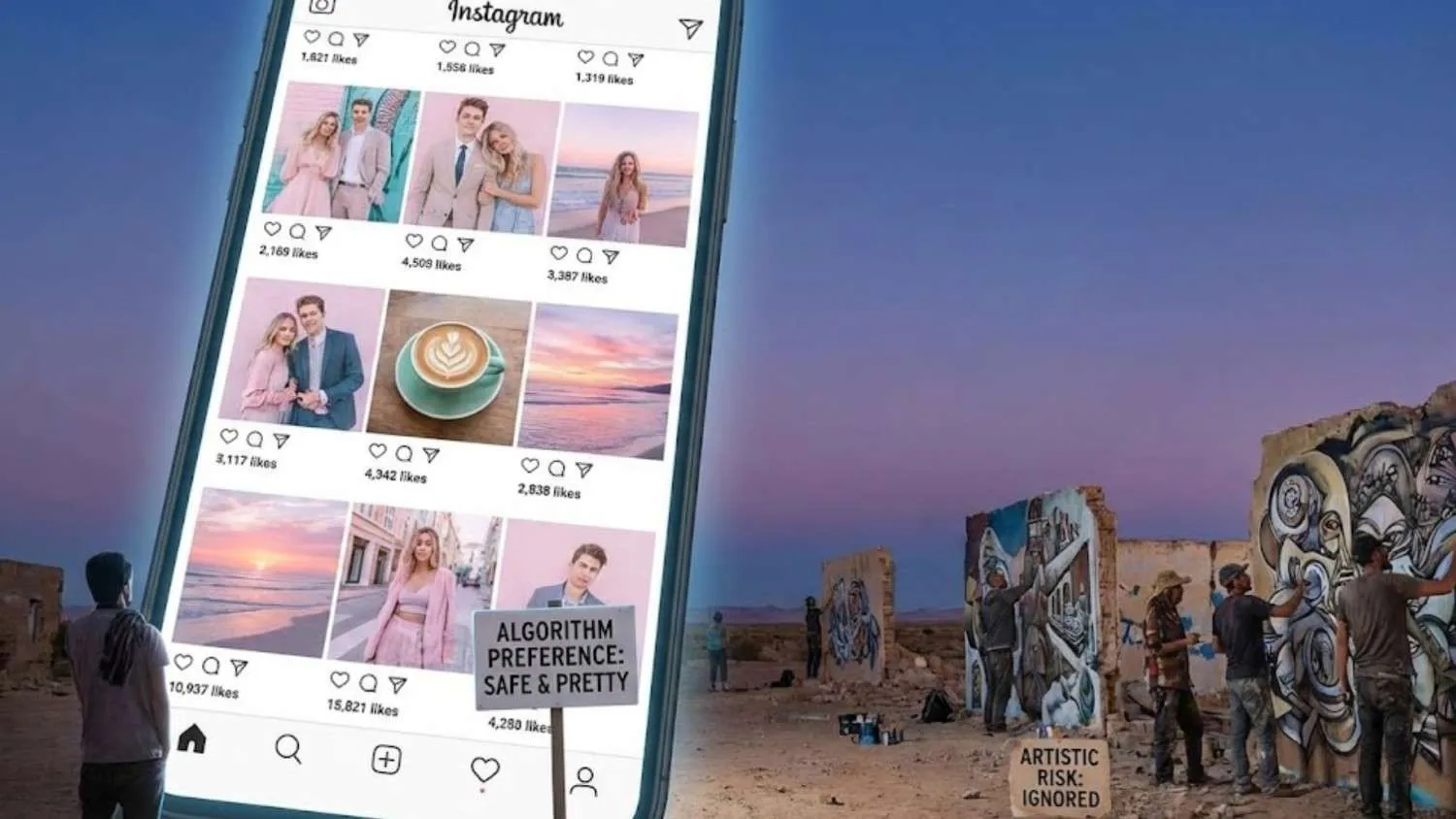
Instagram started as a simple photo sharing app in the year 2010. It gave space to new artists. It was giving space to painters, photographers and designers too. Over time, the platform changed. The algorithm began promoting clean visuals. Now it promotes bright colours and perfect faces. Art that shocks or questions often gets ignored. Many creators noticed this shift. Risky ideas bring fewer likes. Simple pretty images spread faster. This change is not sudden. It happened slowly with updates and ad based growth. Today, success on Instagram often depends on how pleasing content looks on screen. Not on the message behind it.
Artistic Risk Slowly Losing Space On Social Media
Art has always been about taking risks. History shows this clearly. We have seen artists from Raja Ravi Varma to MF Husain. Artists broke rules to create something new. On Instagram, rule breaking is risky. Posts that confuse or disturb viewers often fail to perform well. Creators depend on reach for income. This pushes them to play safe. Many artists now design content for the algorithm. Not for expression. This affects originality. Repeated styles dominate feeds. New ideas struggle to survive. Over time, creative courage reduces. Artists feel pressured to look good instead of saying something important.
The Role Of Likes Followers And Algorithm Pressure
Instagram rewards numbers. People want more Likes, Shares and Followers. These numbers control visibility. The algorithm promotes content that keeps users scrolling. Soft colours, Smiling faces and Short captions is getting promoted. Powerful messages need time to understand. The platform does not support that well. Many artists admit they change their work to please the system. They avoid strong topics. They avoid discomfort. This creates a cycle. Pretty content gets attention. Attention brings growth. Growth brings money. Risky art falls behind. Over time, creators forget their original voice. The system quietly trains everyone to behave the same way.
Young Creators And Students Feel The Biggest Impact
Young artists grow up watching Instagram trends. They learn what works early. This shapes their creative thinking. Many students focus more on presentation than ideas. Art colleges also notice this change. Teachers report less experimentation. More copying. Social media success looks tempting. It promises fast recognition. This pressure affects mental health too. When risky work fails online, self doubt increases. Earlier generations faced rejection from galleries. Today rejection is public and instant. Comments and low reach hurt confidence. This environment makes it harder for young creators to take bold steps.
Why Risk Matters In Art
Every major art movement faced resistance. Impressionism was mocked. Modern art was rejected. Indian folk art was once ignored. These forms survived because artists stayed bold. Social media history is still young. Instagram is just over a decade old. Its influence is strong but not permanent. Experts say platforms shape behaviour but cannot replace real creativity. Offline spaces still value meaning. Museums. Theatres. Books. Over time, audiences also change. When people get tired of perfect images, they search for honesty. Artistic risk has always returned. History shows safe art fades. Brave art stays.
