



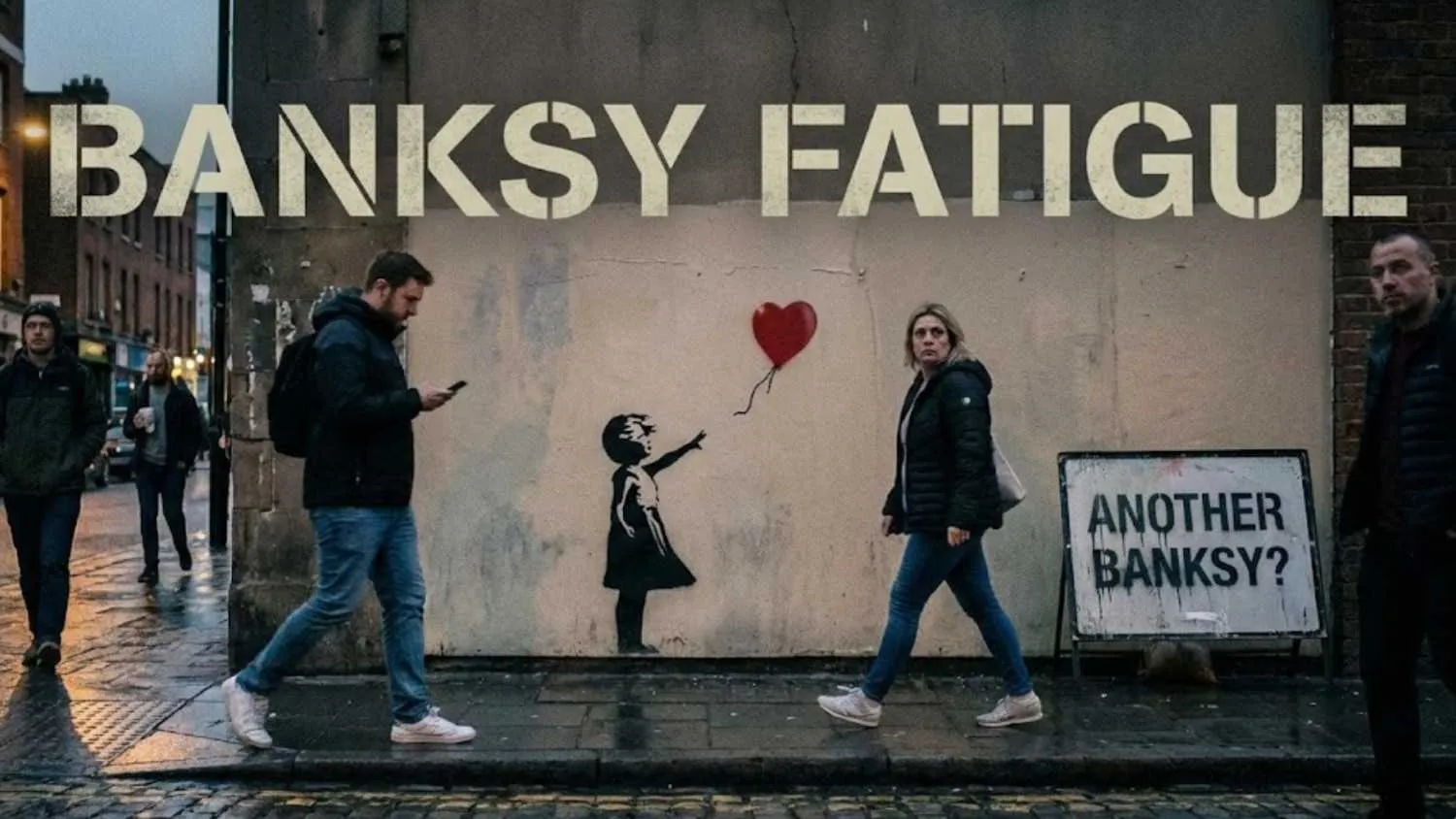
Banksy once created excitement with every new street artwork. People rushed to streets. Photos went viral. Questions were asked. Who is Banksy? Why here? Why now? Today, reactions feel slower. Many still admire the art, but the shock value seems less. Social media is full of comments asking the same thing. Another Banksy again? Experts say repeated surprise stops feeling special. Mystery works only when it feels rare. When artworks appear too often, people begin to scroll past. This is now called Banksy fatigue. Interest remains, but excitement feels lower than before.
Street Art History Shows Surprise Was Always The Core Power
Street art was never about galleries. It belonged to streets. Walls. Public places. In the early days, graffiti was risky. Artists worked at night. Messages were bold. Banksy followed this path. His early works spoke against war, power, and control. Cities like Bristol and London became part of the story. Each piece felt like a secret gift. History shows public art gained value because it was unexpected. When surprise becomes routine, meaning can weaken. This is not new. Many art movements faced the same cycle. Rise. Popularity. Then public saturation.
Social Media Exposure Changes How People React To Banksy Art
Earlier, people discovered Banksy by accident. Walking on streets. Seeing a wall. Now, art appears first on Instagram. Before locals even notice it. This changes the feeling. The moment feels planned. Less raw. More digital. Public space loses its silence. Everyone already knows before seeing it. Many ask. Is this still street art or content creation? Likes and shares create pressure. Every new work is compared to older ones. Some fans say the message feels repeated. Others still defend the impact. But the conversation itself shows growing fatigue.
Commercial Value And Auctions Add To Public Doubt
Banksy once shocked the art world by shredding his own painting at an auction. That moment felt powerful. But later sales raised questions. Works selling for crores. Walls protected by glass. Security guards near graffiti. Street art turning into property confused many people. Is this rebellion or branding? Public spaces were meant for everyone. Now they feel owned. Critics say this shift reduces honesty. Supporters argue the message still matters. But doubts remain. When street art becomes expensive, people begin to judge intention. Fatigue grows when art feels too calculated.
The Mystery Name Still Hidden But Questions Grow Louder
Banksy remains anonymous. This mystery built his fame. But now people ask. Is mystery enough anymore? The world has changed. Audiences want deeper connection. Not just secrecy. New street artists are rising. Fresh voices. New styles. Public space is crowded. Attention is limited. Banksy still matters. But expectations are higher. Every artwork is judged harder. Fatigue does not mean failure. It means the public wants evolution. The streets still listen. The question is simple. Will the mystery change with time or stay the same?
