


Batwara 1947 Ending Explained: How Sunny Deol’s Sikandar Puts Humanity Above Religious Hatred
What happens to Shabana Azmi's Mai in Batwara 1947? Find out how Sikandar chooses humanity over religious hatred in the film’s emotional ending.



0
0
0
0
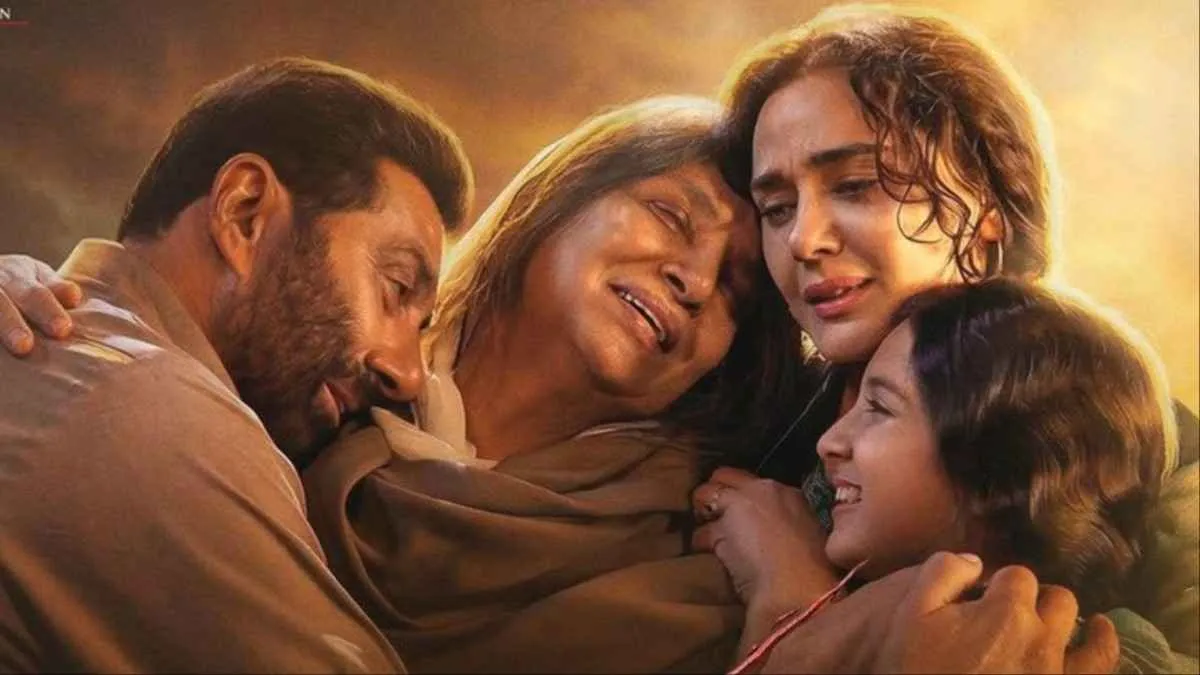
Photo :X
Rajkumar Santoshi’s Batwara 1947 brings the human cost of Partition into focus through one family’s emotional struggle. The Sunny Deol and Shabana Azmi starrer shows how hatred and displacement affected ordinary people.
Based on Asghar Wajahat’s acclaimed play Jis Lahore Nai Vekhya, O Jamya E Nai, the film follows a Muslim family that moves into a Lahore haveli after Partition. However, they soon discover that an elderly Hindu woman still lives there. So, what happens to Mai, and how does Batwara 1947 end?

Why Does Sikandar Save Mai?
Sikandar Mirza (Sunny Deol) initially sees Mai (Shabana Azmi) as a problem. His family has been given the haveli, while Mai refuses to leave the home she has known all her life.
However, his feelings slowly change. Sikandar realises that Mai has already lost almost everything because of Partition. He begins to see her as an elderly woman who needs protection rather than someone standing in his way.
Their bond becomes one of the film’s emotional highlights. Sikandar chooses compassion even as tensions between communities continue to grow.
What Happens To Mai?
Mai eventually dies, taking the story in a tragic direction. Her death creates another conflict for the Mirza family.
The question now is whether Mai will be allowed to receive Hindu funeral rites in a city deeply affected by communal hatred. Sikandar refuses to treat her death as a religious or political issue.
For him, Mai deserves dignity after everything she has suffered.
How Does Batwara 1947 End?
In the climax, Sikandar stands up for Mai’s final rites. He faces people who want to prevent her from receiving a Hindu funeral.
Sikandar and those supporting him eventually ensure that Mai is cremated according to Hindu customs. Her funeral becomes the film’s most important statement about humanity.
Sikandar does not fight for Mai because she belongs to his community. He fights because she is a human being who deserves a respectful farewell.
The ending also connects directly with the central conflict of Wajahat’s original play. It asks whether religious differences should matter even after a person has died.
What Does The Ending Of Batwara 1947 Mean?
The ending shows that Partition divided land, families and communities, but it could not completely destroy human compassion.
Mai’s death represents the personal losses suffered by countless people during Partition. At the same time, her funeral becomes a small act of reconciliation.
Sikandar’s final stand also gives his character a different kind of heroic moment. Instead of defeating an enemy, he protects another person’s dignity and right to follow her faith.
Shabana Azmi adds emotional depth to Mai’s character. Her performance captures the pain of a woman who refuses to let go of her home and everything it represents.
Batwara 1947 ultimately ends on a bitter but hopeful note. The physical border created by Partition remains, but Sikandar’s actions suggest that compassion does not have to recognise those borders.

About the author
Surya is a freelance review writer and features editor at TFC with over 5 years of experience in the industry. Mail your queries to him at svishu2708@gmail.com
Share This Article