


Batwara 1947 Review: Sunny Deol & Shabana Azmi Are the HEART of This Emotional Partition Drama
Batwara 1947 Review: Sunny Deol and Shabana Azmi deliver powerful performances in this emotional Partition drama about humanity, loss and hope.


0
0
0
0
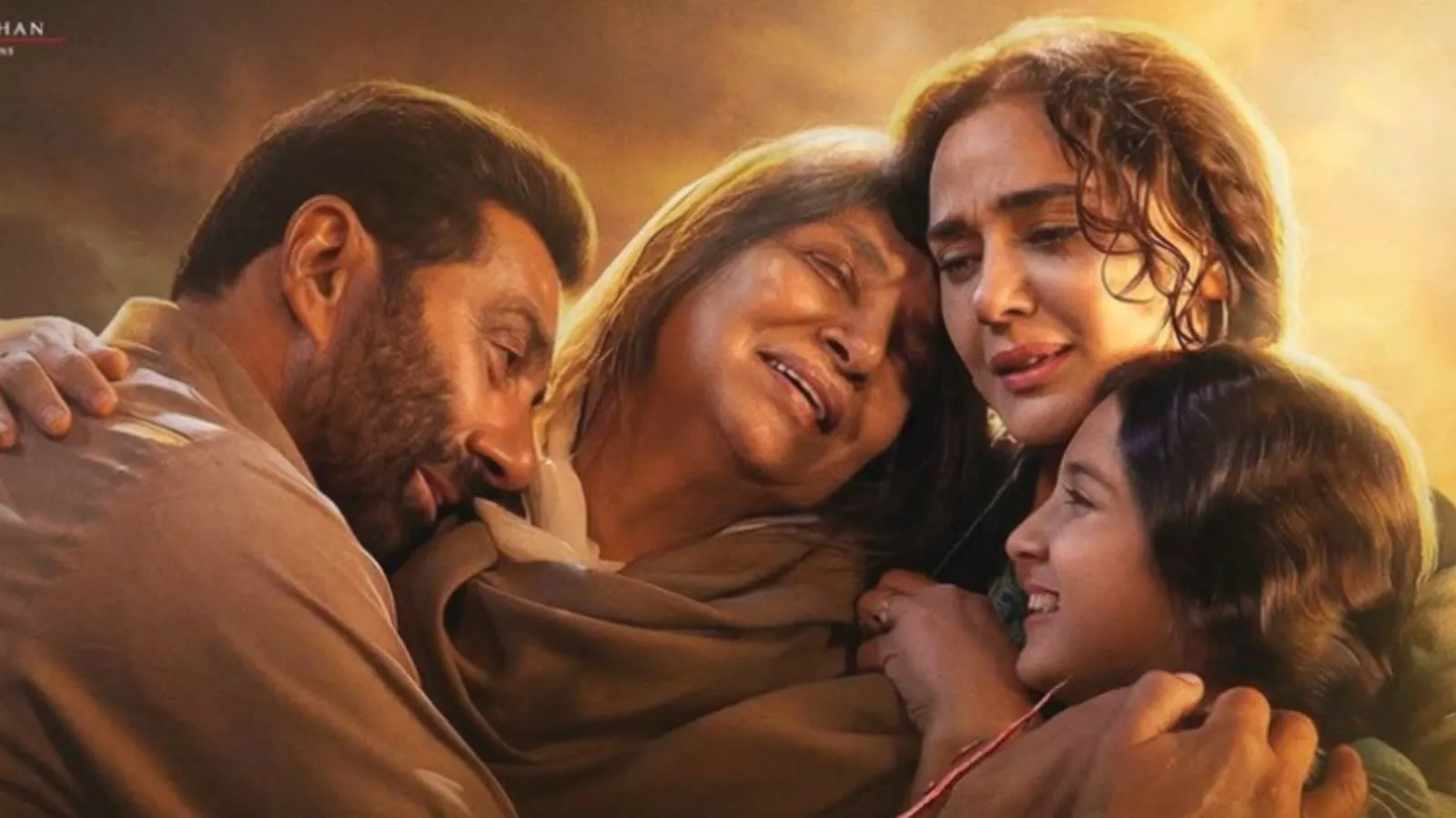
Photo :X/Aamir Khan Productions
Rajkumar Santoshi’s Batwara 1947 arrives with a story set during one of the darkest chapters of Indian history, but its biggest strength is that it does not simply focus on borders, violence or the India-Pakistan divide. At its heart, the film is about people. It explores what happens when fear, displacement and communal hatred force ordinary individuals to choose between prejudice and humanity.
Director: Rajkumar Santoshi
Producer: Aamir Khan and Aparna Purohit
Cast: Sunny Deol, Preity Zinta, Shabana Azmi, Ali Fazal, Karan Deol and Abhimanyu Singh
Where to Watch: In Theatres
Run Time: 2 hours 25 minutes
Rating: 3.5/5
Story
Set against the backdrop of the Partition of India, Batwara 1947 follows Sikandar Mirza (Sunny Deol), a Muslim family man who is forced to leave Meerut with his family amid the violence surrounding Partition. After reaching Lahore, Sikandar struggles to rebuild his life and eventually gets a house that appears to have been abandoned by its previous owners.
But the house is not empty. An elderly Hindu woman, Mai (Shabana Azmi), is still living there and refuses to leave her ancestral home. What initially becomes a conflict between Sikandar’s family and Mai gradually develops into an unexpected relationship built on understanding, compassion and mutual respect.
The film is adapted from Asghar Wajahat’s acclaimed play Jis Lahore Nai Vekhya, O Jamya E Nai, and this theatrical foundation is visible in the way the story relies heavily on characters, conversations and its central metaphor of a shared home.
The strongest aspect of the writing is its message. Rather than presenting Partition merely as a story of two nations fighting each other, Batwara 1947 focuses on the ordinary people who were caught in the middle.
However, the emotional transformation between the characters sometimes feels too sudden. The film tells us that relationships have changed, but some of these transitions could have been developed more naturally. This is one area where the film loses some of the impact its premise promises.
Performances
Sunny Deol gets a role that allows him to move beyond the larger-than-life action hero image. As Sikandar Mirza, he brings warmth, conviction and intensity to a man struggling to protect his family while navigating an unfamiliar and hostile environment. There are still moments where the film gives him the kind of thunderous dialoguebaazi audiences associate with Sunny Deol, but his quieter emotional moments are equally important. Early audience reactions have particularly praised the vulnerability and intensity in his performance.
Shabana Azmi is arguably the film’s biggest emotional strength. As Mai, she brings dignity, stubbornness and vulnerability to a woman who refuses to surrender her home or her identity. Her scenes with Sunny Deol form the emotional backbone of the film. Preity Zinta makes a convincing return as Hamida. Her character represents the emotional cost of displacement and separation, although the screenplay does not always give her enough space to explore that pain.
Ali Fazal leaves a strong impression in his role as Habeeb, a poet who helps Sikandar and brings warmth to the narrative. Abhimanyu Singh effectively plays the intimidating Yakub Pahalwan, even though the character occasionally feels closer to a traditional Bollywood villain than a deeply layered antagonist. Karan Deol also gets moments to shine, but he is naturally overshadowed by the veterans around him.
Technical Aspects
Rajkumar Santoshi keeps Batwara 1947 rooted in mainstream Hindi cinema while attempting to give the Partition drama an emotional and human dimension. The film’s period setting and art direction help establish the atmosphere of a society fractured by violence and displacement. The cinematography by Santosh Sivan gives the film a strong visual foundation, while A.R. Rahman’s music adds emotional weight to the period setting. The film’s production design and costumes work toward recreating the era, although some portions can feel more constructed than lived-in. This artificiality has been one of the criticisms raised by reviewers.
The screenplay has some genuinely powerful ideas, particularly its central metaphor of people from different communities sharing the same home. But the film occasionally becomes too direct in delivering its message. Certain emotional sequences are stretched longer than necessary, while some character developments happen abruptly. That said, the film’s strongest scenes are effective precisely because they allow humanity to take centre stage instead of turning Partition into merely a spectacle of violence.
Final Words
Batwara 1947 is not a flawless Partition drama, but it is a film with a strong heart and an important message. Its biggest achievement is its attempt to remind audiences that Partition was not merely about the creation of borders; it was about millions of ordinary people who lost homes, families, identities and a sense of belonging. Sunny Deol and Shabana Azmi carry much of the film’s emotional weight, while Preity Zinta and Ali Fazal add meaningful support. The storytelling does stumble at times, particularly when it rushes emotional transitions or leans too heavily on familiar Bollywood melodrama.
Yet, when Batwara 1947 focuses on humanity over hatred, it genuinely works. It may not have the emotional perfection of a great Partition classic, but its central message remains powerful and relevant.

About the author
Kevin Varchand — Senior Entertainment Correspondent
Kevin Varchand is an entertainment journalist at The Filmy Charcha, covering Bollywood, celebrity culture, and trending stories with a sharp, engaging, and audience-first approach.
Covers: Bollywood, Ott, Trending
Share This Article