



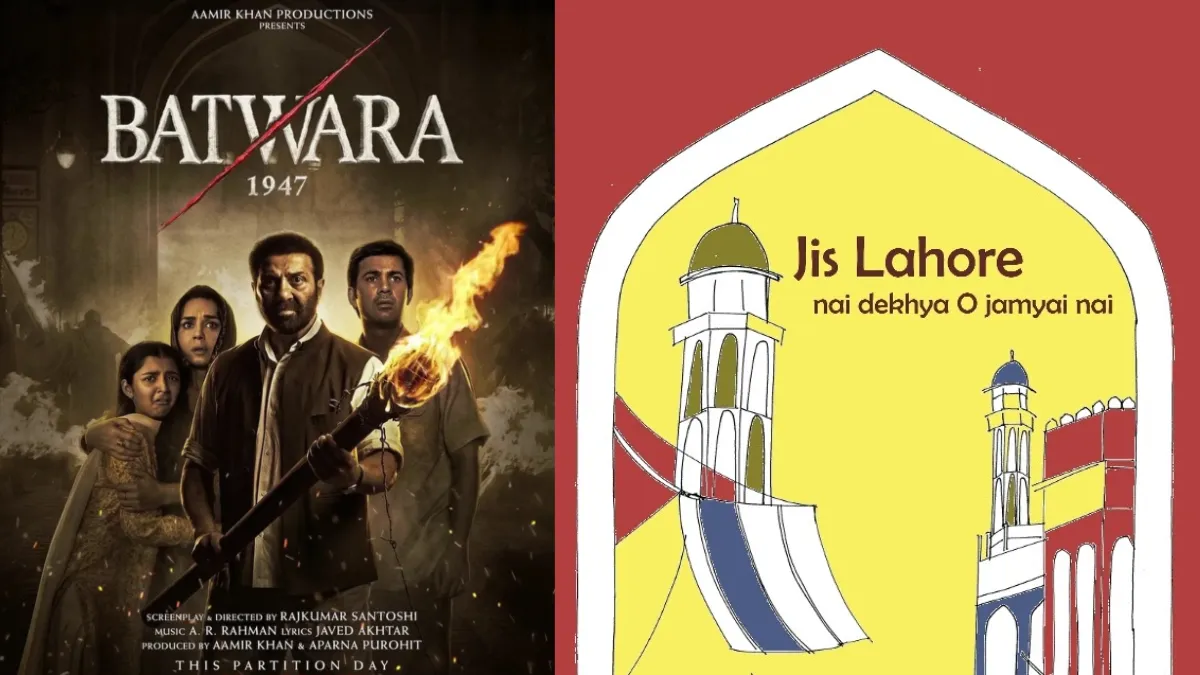
Rajkumar Santoshi recently spoke about Batwara 1947 and what made him take up another Partition story. The filmmaker said Partition is an event recorded in history and can inspire many stories. He pointed to films made on events like the Holocaust and World War II. Santoshi said India has had fewer films on Partition despite its huge potential. For him, the key was looking at people beyond religious identities. He said, “Insani relationships ke upar ismein potential bahut saara literature hai.” The director added that the film looks at people as human beings and not simply as Hindus or Muslims.
Batwara 1947 Looks At Humanity Amid Violence
Santoshi recalled working with Govind Nihalani and described Tamas as one of the finest television productions in his view. He explained why that work stayed with him while approaching Batwara 1947. “Violence ke beech mein real emotions hai. Wahi cheez ismein mujhe pasand aayi ki insaan ko insaan ki tarah dekhe na ki Hindu Muslim.” He also said mistakes happened on both sides during that period. “Wo daur aisa tha, passion aisa tha. We see the worst man and the best man dono nazar aaye hain.” According to him, some people also showed extraordinary courage and sacrifice.
Rajkumar Santoshi Was Extra Careful With The Play
Batwara 1947 is based on Asghar Wajahat’s popular play Jis Lahore Nai Vekhya O Jamyai Nai. Santoshi revealed that the play already had a strong emotional impact on audiences. “Kayi log jo dekh chuke hain, aaj bhi, har jagah kahin na kahin chalte chalte, kai bhaashaon mein wo translate hua hai.” He said journalists who had seen the play sometimes became emotional while discussing it with him. “Kuch journalists milte the, to rote the mere saamne. Kya play hai.” This made Santoshi more careful about adapting it for cinema.
Film Keeps The Soul Of Asghar Wajahat’s Story
Santoshi admitted that the praise for the original play also created pressure. “Itni tareef, itne logon ka dil chhoo hua hai, to isko film mein alliance karna chahiye, kami na reh jaaye.” He said the team therefore made the film with extra care. Asghar Wajahat remained involved with the project. Santoshi explained that around 30 percent of the film comes directly from the play while around 70 percent was developed differently for cinema. “Naye dialogues se, nayi saari cheezein. But uska jo rooh, aatma hai, wahi hai jo play mein tha.”
