



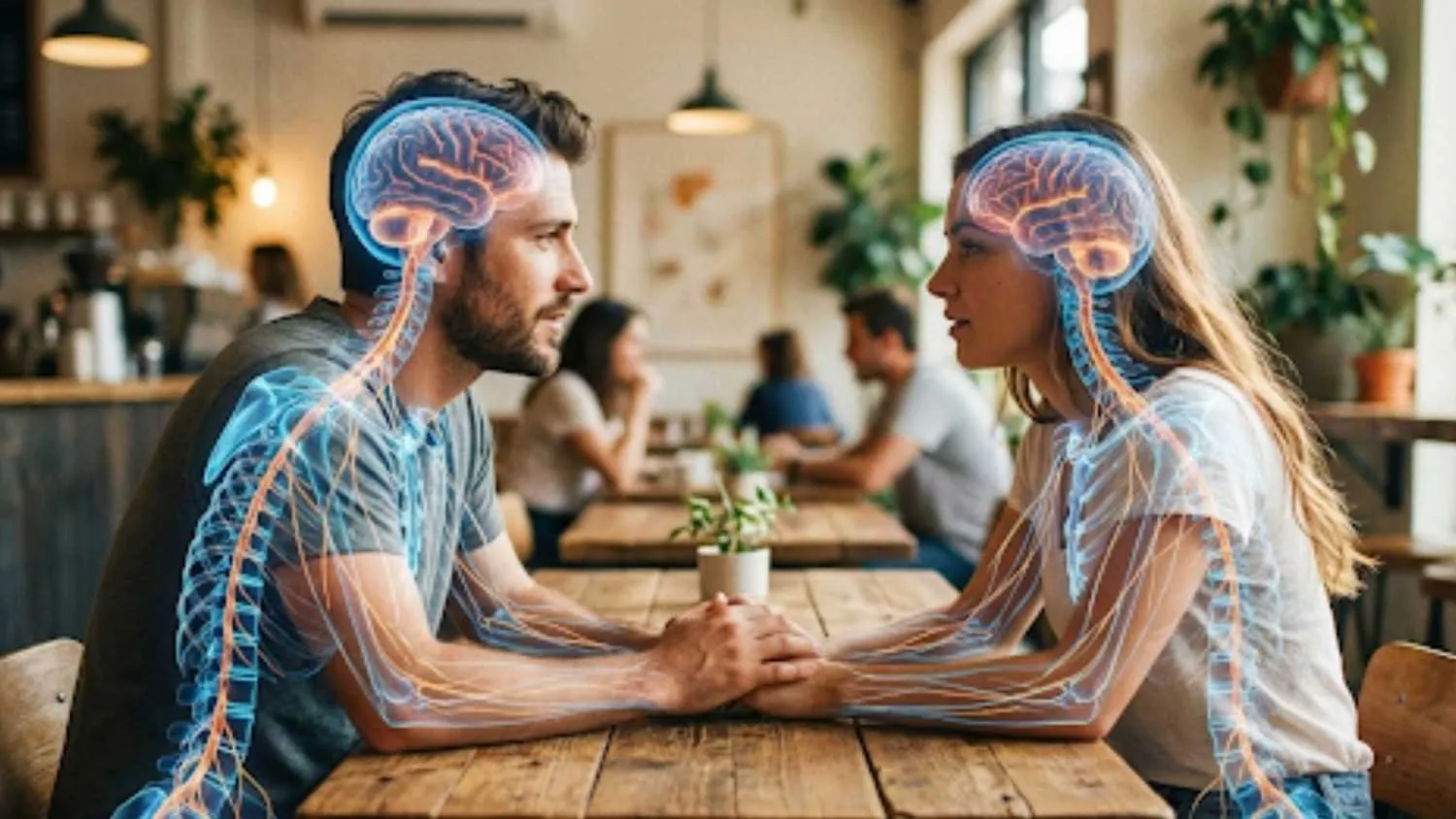
People often say chemistry is instant. But what is really happening?
Neuroscience explains it simply. When two people meet, their nervous systems react first. Heart rate changes. Muscles tighten or relax. Breathing shifts. If the body feels safe, the mind opens. If it feels alert, walls go up.
This response is automatic. It comes from survival wiring. That is why some people feel calm together without effort. Others feel tired after talking. Compatibility often begins at the body level, not personality tests or dating questions.
The Nervous System Learns From Past Relationships
Every nervous system carries memory. Childhood experiences matter. Past relationships leave marks.
A person raised in calm homes often responds calmly. Someone who faced stress early may stay alert longer. This is not weakness. It is adaptation. Science shows the body learns patterns to stay safe.
When two people connect, these patterns interact. One calm system can soothe another. Two stressed systems can increase tension. History plays a silent role here. Emotional responses today are shaped by experiences from years ago. The body remembers even when the mind forgets.
History Shows Humans Always Matched Through Safety
Before modern dating, humans chose partners for survival. Tribes depended on trust. Calm cooperation mattered.
Anthropologists note that early bonding focused on safety signals. Body language. Voice tone. Predictable behaviour. Romance was not just emotion. It was regulation.
Even today, these signals guide attraction. The nervous system still scans for safety like it did centuries ago. Technology changed dating speed, not biology. Swipe culture may feel modern.
But the body still asks one old question. Can I relax around this person?
Why Some Relationships Feel Easy Without Trying
People often ask, why does it feel natural with some and exhausting with others?
Nervous system regulation gives an answer. When two systems sync well, stress reduces. Conversations flow. Silence feels comfortable. Disagreements do not feel threatening. This does not mean no conflict. It means recovery is faster.
Science calls this co regulation. Partners help each other return to calm. This balance supports emotional health. It also improves focus and sleep. Compatibility here is practical, not romantic fantasy. The body feels supported, not tested.
Experts Say Compatibility Is Built, Not Found
Doctors and therapists agree on one thing. Nervous systems can learn. Safety can be created.
Healthy communication helps. Consistent behaviour builds trust. Respect reduces alert responses. Over time, the body learns a new pattern. This explains why some relationships grow stronger with effort.
Compatibility is not fixed at first sight. It develops through shared regulation. Experts focus less on labels and more on emotional stability. Facts show regulated partners handle stress better together. Love works best when the nervous system feels understood.
