



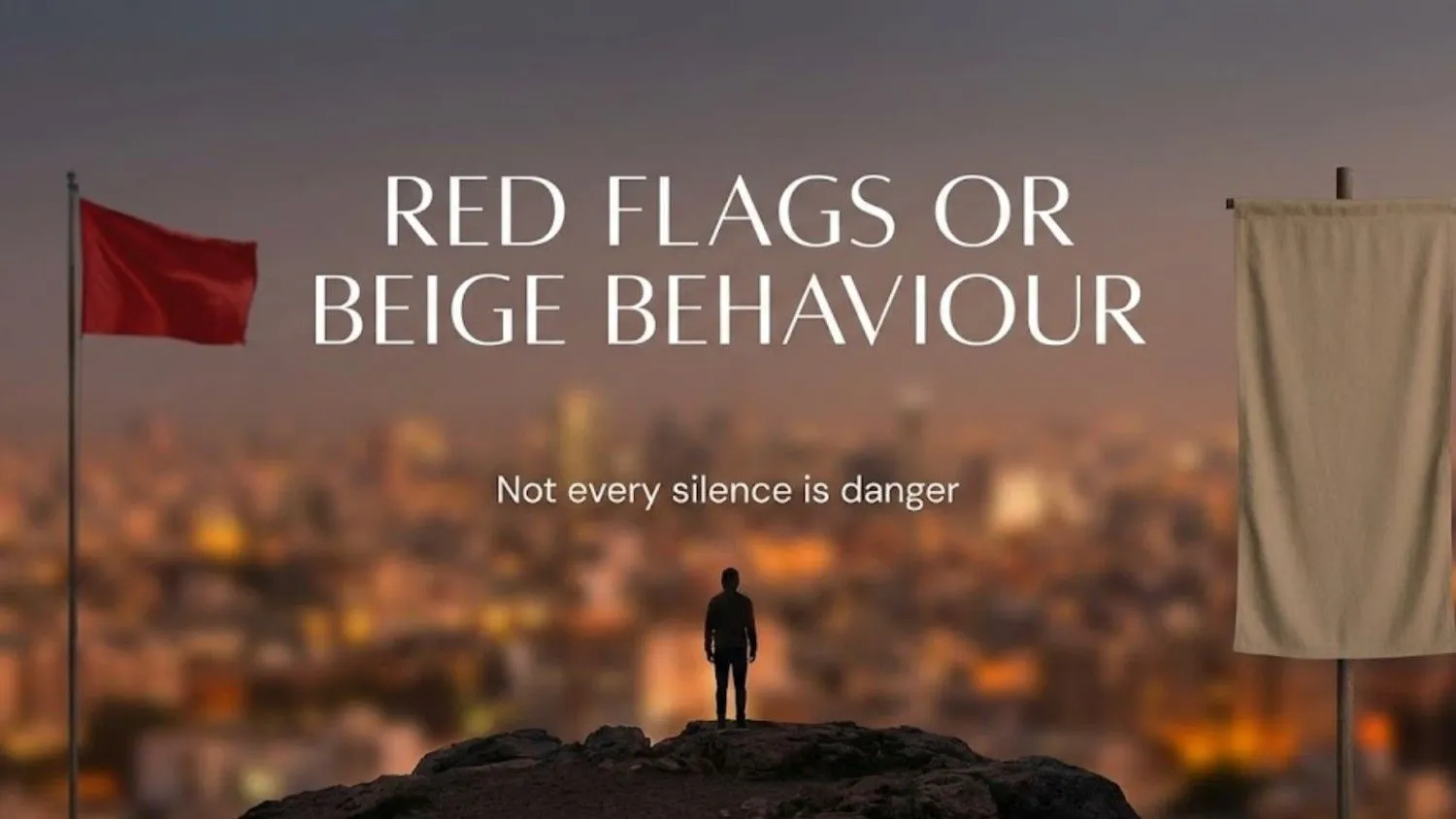
The term red flag did not start with dating. It came from danger warnings. In history, red flags were used in wars and races to signal stop. Slowly, this word entered relationship talks. Especially after social media and dating apps became common in India.
People started asking. Is this behaviour toxic? Is this a warning sign? Many forget that earlier generations did not label every habit. They adjusted more.
Today, awareness is good. But overthinking is also rising. Every late reply or quiet mood is now seen as a problem. That is where confusion starts.
What Red Flags Actually Look Like In Real Life
Red flags are serious patterns. They are not one time actions. Experts say red flags include control, disrespect, fear, and repeated lying. If someone stops you from meeting family, that is a red flag.
If someone insults you often, that is a red flag. If someone makes you scared, that is a red flag. These signs were present even years ago. Our parents just did not name them.
Red flags affect mental peace. They do not come with excuses. They stay even after talking and explaining. That is the key difference people must notice.
Beige Behaviour And Why It Feels So Confusing
Beige behaviour is not dangerous. It is just boring or dull habits. Like someone who texts dry replies. Or someone who is bad at planning dates. Or someone who prefers routine life.
Social media calls this boring love. But boring is not bad. In Indian homes, many marriages survived on calm routines. No drama. No daily romance talks. Beige behaviour does not harm self respect. It does not create fear. It only tests patience.
Many people mistake this as red flags because online content pushes excitement as love. That is not always true.
Social Media Panic And Relationship Overthinking
Instagram reels and podcasts changed how people judge partners. One video says silent partner is toxic. Another says emotional partner is a red flag. This creates panic. Young people start scanning every move. History shows relationships earlier grew slowly. There was less comparison.
Now people compare their private life with filtered clips. This makes beige behaviour look wrong. Experts warn that over analysing can break healthy bonds. Not every habit needs fixing. Some people are quiet by nature. Some show love through actions, not words. Social media does not show this balance.
How To Tell The Difference Without Losing Peace
Facts are simple. Red flags drain energy. Beige behaviour just feels plain. Ask one question. Does this behaviour hurt me or just annoy me? Hurt means red flag. Annoy means beige.
Red flags stay even after clear talks. Beige behaviour can improve with time. History of relationships proves communication matters. Not labelling everything saves mental health. People are humans, not perfect reels.
Knowing the difference helps choose wisely. It avoids unnecessary breakups. It also protects people from real danger. Understanding this balance is more important than following online trends.
