



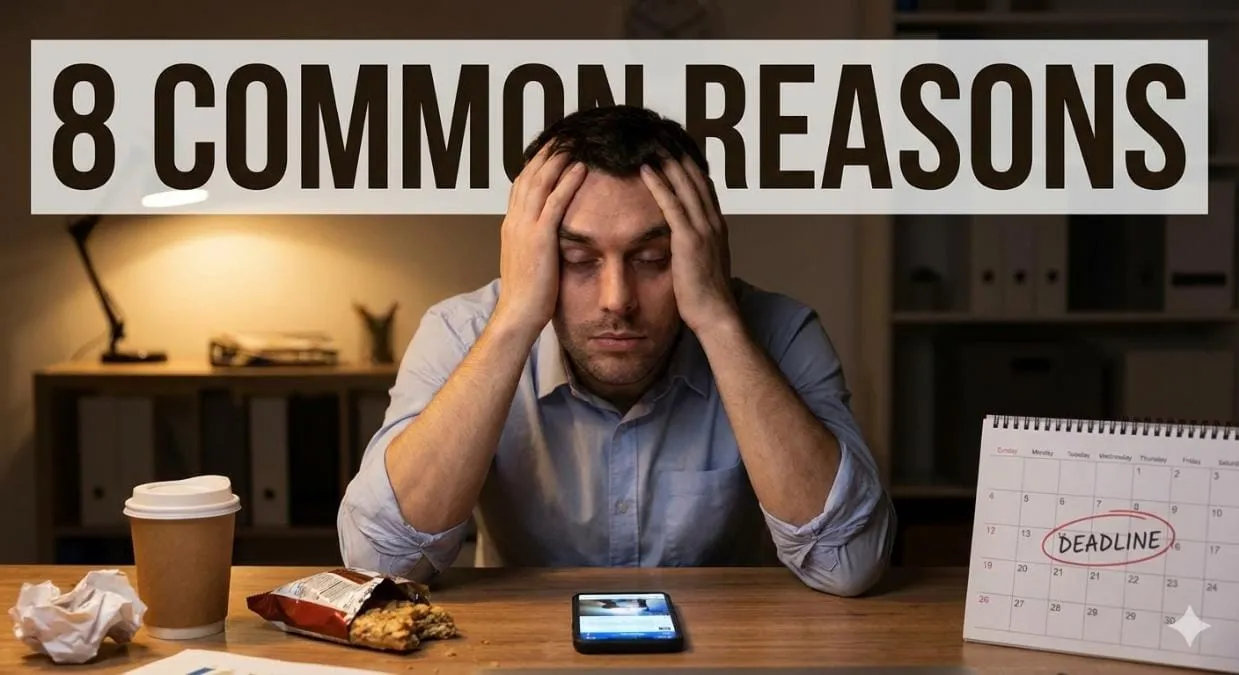
Sleeping More Doesn’t Always Mean Resting Better
Many of today’s citizens get enough rest. But waking up the next day and still wake up tired, drained, and unmotivated. Such fatigue is confounding, frustrating. Sleep quality is often a function of mental load and lifestyle stress.
Here are eight common reasons why you may feel exhausted even after sleeping well.
1. Poor Sleep Quality
You might be sleeping for seven to eight hours, but the sleep might be shallow or frequently interrupted. Scrolling late at night, not necessarily sleeping at the same time, or being exposed to blue light can block deep sleep cycles. Without deep sleep, even the body never fully recovers.
2. Overthinking and Mental Fatigue
Physical work is not less tiring than mental exhaustion. Mindfulness, worrying and the planning and decision-making we discuss and worry about keeps the brain active at rest. Your body may be in bed, but your mind never goes off completely. This results in waking up tired when you’ve slept enough.
3. Chronic Stress and High Cortisol Levels
Chronic stress keeps the nervous system on high alert. When cortisol is high, the body has difficulty relaxing fully. Sleep becomes lighter, the recovery process slower. Tiredness from stress often seems like heaviness, not just sleepiness.
4. Emotional Exhaustion
Unprocessed emotions take energy. Emotional stresses associated with relationships, work pressure or unresolved conflicts can wear you down passively. Even when your body is rested, emotional fatigue can be enough that you’re exhausted all day. So, this sort of fatigue frequently manifests itself as low motivation and irritability.
5. Lack of Physical Movement
Sitting for a long time reduces circulation and reduces energy. Not moving enough, ironically, makes you feel more tired. Gentle activities, such as walking or stretching, help regulate sleep, improve mood and increase energy. The body needs movement to feel awake.
6. Poor Nutrition and Irregular Eating
Skipping meals, eating too much late or drinking too much caffeine and sugars can cause energy crashes. Fluctuating levels of blood sugar tend to trigger mid-day fatigue, brain fog, and perpetual fatigue, even when one has had a good night of rest. Food is directly responsible for how rested you feel.
7. Screen Overload and Digital Fatigue
An overindulgence in screens for too long causes the brain to overstimulate itself. But daily presence in front of screens overstimulates the brain. Mental rest becomes impossible with notifications, scrolling, and late-night scrolling, consuming late-night reads and watching feeds. That keeps the nervous system stimulated long after bedtime. Digital fatigue can lead to disrupted sleep patterns and even daytime fatigue.
8. Underlying Health or Hormonal Issues
And sometimes chronic tiredness points to something more fundamental. Chronic fatigue can also be caused by low iron levels, thyroid imbalance, vitamin deficiency or sleep disorder. If tiredness persists despite lifestyle changes, a doctor’s advice may help. Taking the time to listen to your body early can spare you a long burnout.
Final Words
Feeling tired all the time is not like you are lazy or unmotivated. In many instances, it is the body demanding better rest, emotional support, emotional care and equilibrium, with good nutrition and care, rather than just more sleep. True rest means minding the mind, balancing your stress, shaking down your body and taking care of yourself. Sleep is a must, but recovery is much deeper than hours on a clock.
