



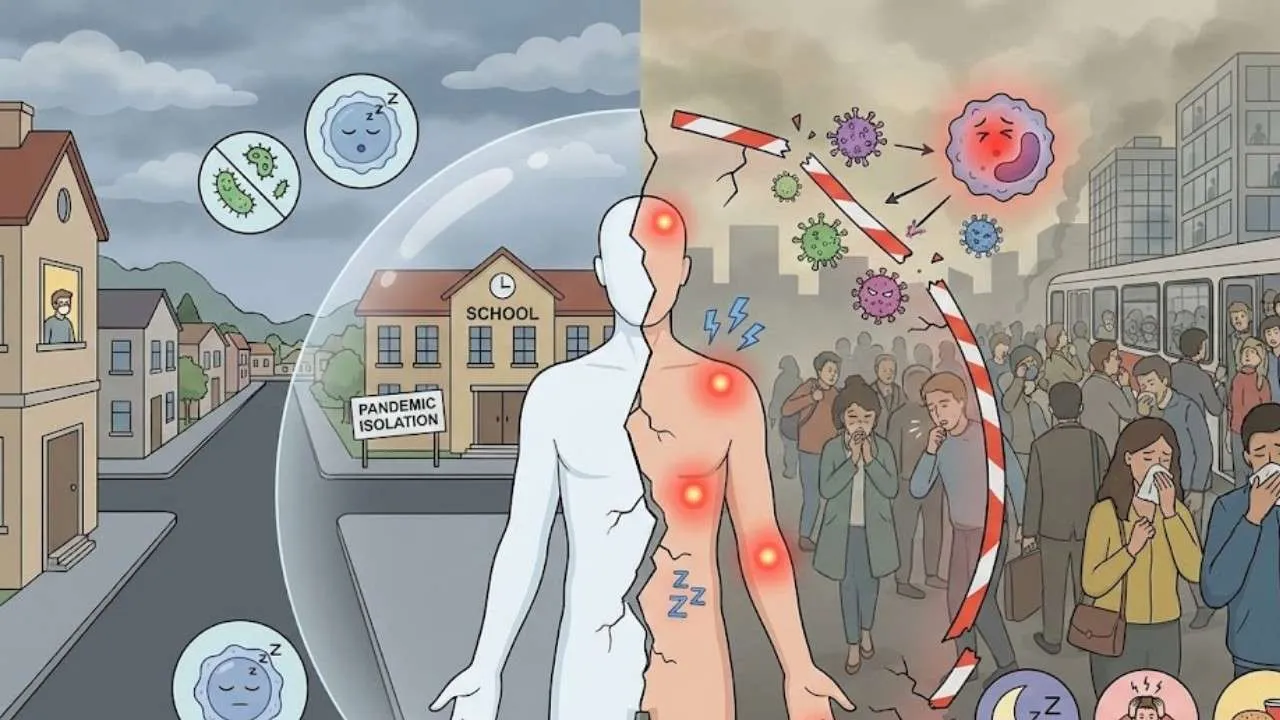
Across India and many parts of the world, people report falling sick more often than before. Colds last longer. Fevers return quickly. Recovery feels slow. Doctors call this a post-pandemic immunity hangover. During COVID years, people stayed indoors. Masks were common. Social contact reduced. This limited exposure to everyday germs. The immune system did not get regular practice. As life returned to normal, the body struggled to respond quickly to routine infections.
What Changed During the Pandemic Years
Before 2020, daily exposure to viruses helped maintain immune memory. Schools, offices, and public transport acted as training grounds. Lockdowns stopped this cycle. Children missed early immune exposure. Adults avoided routine infections. Studies show reduced circulation of flu and cold viruses during lockdowns. This created what doctors call immunity debt. When restrictions ended, viruses returned fast. Immune systems were unprepared. This led to repeated illness across age groups.
Role of COVID Infection Itself
Medical research shows COVID-19 can affect immune response even after recovery. Some patients show inflammation lasting months. White blood cell function may change temporarily. This does not mean immunity is permanently damaged. It means response time slows. Repeated infections become more noticeable. Long COVID cases show fatigue, brain fog, and weak resistance. Even mild COVID cases can cause short-term immune imbalance. This explains why people feel sick more often post pandemic.
Lifestyle Factors Making It Worse
WFH habits reduced physical activity. Screen time increased. Sleep cycles became irregular. Stress levels rose due to uncertainty and financial pressure. Nutrition quality dropped for many households. These factors directly affect immunity. Air pollution also worsened in cities after reopening. Even in 2025, now AQI is consistently increasing. Delhi has AQI over 400. Some doctors have even suggested to leave Delhi for 6-8 months if possible. Pollution irritates airways. It also weakens defence mechanisms. Together, poor sleep, stress, low exercise, and pollution made bodies less resilient to infections that were earlier manageable.
Why Children and Young Adults Are Falling Sick More
Paediatricians report more infections among school-going children. Young immune systems need gradual exposure. Pandemic isolation delayed this process. Once schools reopened, infection spread increased. Young adults face high stress and irregular routines. Many skip meals or rely on processed food. This affects immune strength. Doctors say the rise in illness does not mean weaker generation. It reflects delayed immune training. Over time, immunity is expected to stabilise again.
