



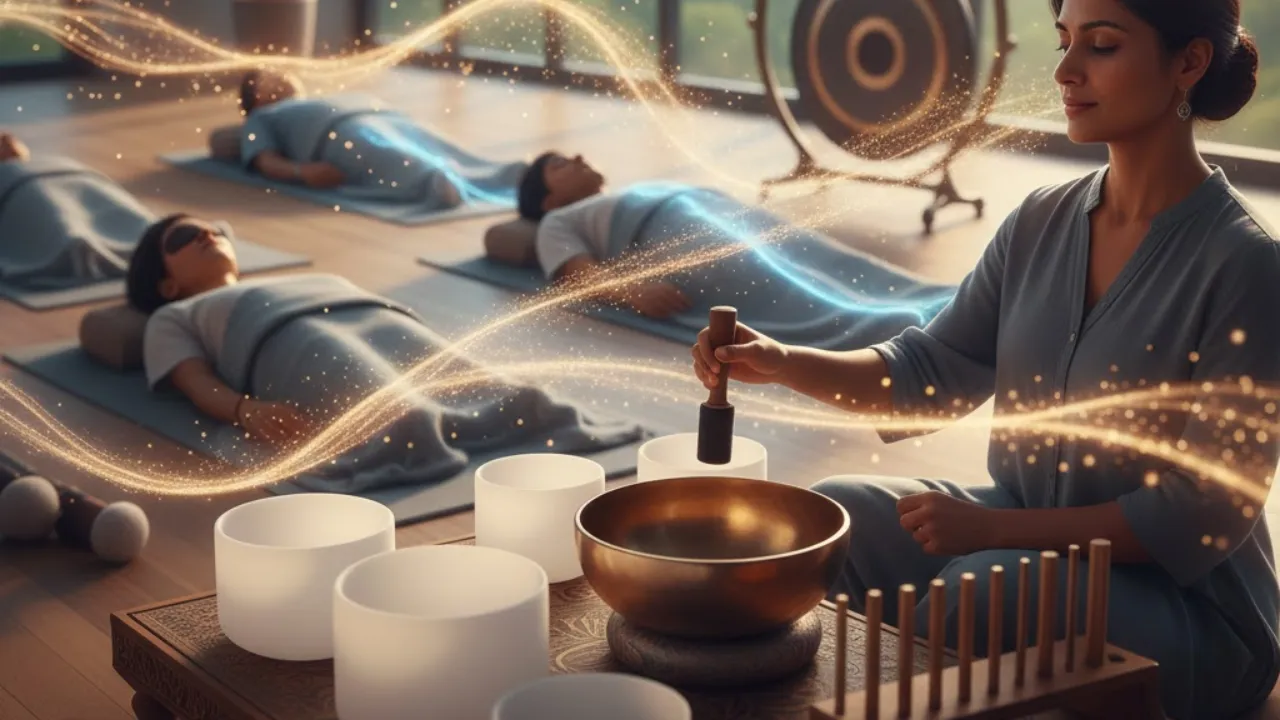
Sound bath therapy is becoming popular in cities and wellness centres. People lie down while soft sound vibrations play. These sounds come from singing bowls, gongs, and tuning forks with experts saying vibrations help calm the nervous system where many report better sleep and less tension after sessions. Social media users share videos of these sessions daily. Some share that it feels like deep meditation. Wellness studios confirm bookings have increased in recent years. Facts show more people now prefer natural stress relief methods instead of only medicines.
Ancient Roots Behind Modern Trend
Sound healing is not new. It existed in ancient cultures of India, Tibet, and Greece. Old texts mention chanting and bells for mental peace. Monks used singing bowls during meditation for focus. Historians say these traditions were linked to spiritual rituals. Over time science studied sound effects on brain waves. Researchers found certain frequencies can slow heart rate. This discovery made sound therapy popular again. Modern clinics now mix ancient instruments with digital frequency tools. Experts state this blend of history and science attracts young users.
How Frequency Tools Affect The Body
Many ask how sound vibrations work inside the body. Scientists explain that sound travels as waves. These waves reach ears and nervous system. Slow rhythm sounds signal brain to relax. Studies show calm frequencies may reduce stress hormone levels. Doctors say relaxed brain supports better mood and focus. Some devices use fixed tones designed for relaxation. People who tried them reported reduced anxiety feelings. Health professionals clarify these tools support wellness but do not replace medical treatment. Facts confirm they are safe when used correctly.
Experiences It Gives
People online show mixed but mostly positive reactions. Sound bath helps people sleep after months of stress. The session sometimes feel strange at first but calming later. Some people question if it is science or belief. Therapists respond that both mind and body react to sound. Wellness coaches note that results vary from person to person. Surveys show many first time users return for more sessions. This repeat rate indicates growing trust. Public curiosity is clearly pushing the trend forward.
Why Experts Call It A Future Wellness Tool
Health specialists believe sound therapy may become a regular self care habit. Urban life brings noise, pressure, and fast routines. Calm sound sessions offer simple relief. Clinics now include sound therapy in stress management plans. Some hospitals test it for patient relaxation support. Experts predict wearable frequency devices may soon become common. Researchers continue studying long term benefits & evidence already shows reduced tension and improved mood in many users. Professionals agree sound based relaxation is moving from alternative therapy to mainstream wellness practice.
