



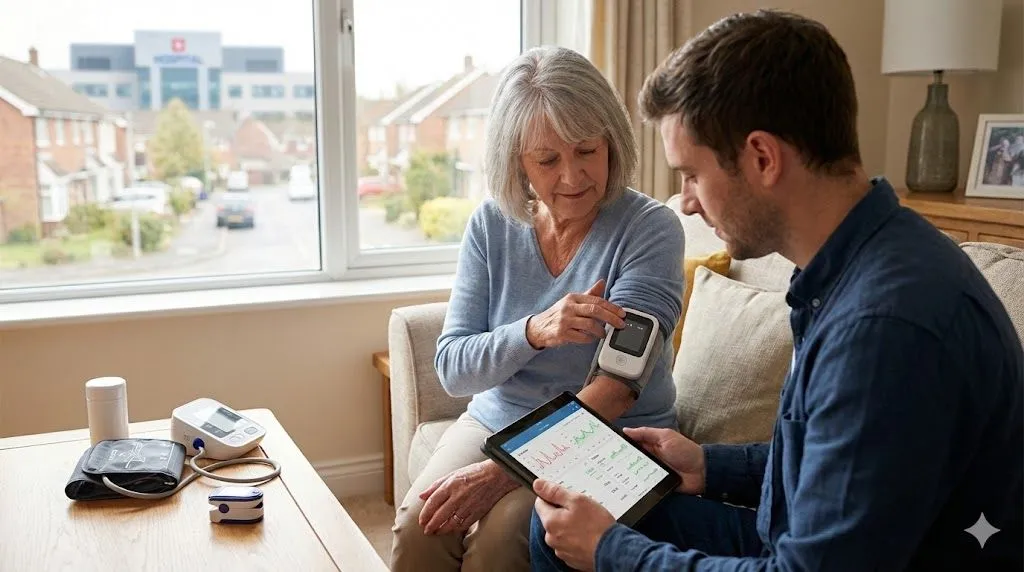
Do you know hospitals are slowly entering homes? The term Home-pital is now used for high tech home diagnostics. These tools allow people to check health from their living rooms. Devices now test sugar, BP, oxygen, heart rate, sleep, and more. Earlier, such tests needed clinics. Now they are portable and simple. Doctors say Home-pital systems reduce pressure on hospitals. People ask, is home testing reliable? Experts say accuracy has improved a lot. This change is becoming common in Indian cities and towns.
Technology Behind Home-pital Systems
How does Home-pital actually work? Smart devices use sensors, AI, and cloud systems. Data is collected in real time. Reports are shared with doctors instantly. Smart ECG machines detect heart rhythm issues. Digital BP monitors track trends. Portable blood test kits give results within minutes. Companies say these tools match lab standards. History shows diagnostics once needed big machines. Now technology has shrunk them. This shift started with glucometers. Today it includes full health panels. Home-pital is not science fiction anymore. It is daily reality.
India’s History With Home Based Care
India always had home care culture. Earlier, doctors visited homes. Elders used traditional methods. Hospitals were last options. Over time, clinics replaced home visits. Now technology is bringing care back home. Doctors say Home-pital combines tradition with science. During COVID, home monitoring saved lives. Oxygen meters became household items. Telemedicine grew fast. That period pushed Home-pital adoption. People now trust devices more. History shows crisis accelerates change. Home-pital is one such result. It is growing beyond emergencies into routine health management.
What People Are Saying About Home-pital Care
Public reactions are mixed but curious. Many people say home testing saves time. They avoid traffic and waiting rooms. Parents like it for children. Elderly patients feel safer. Online comments praise comfort. Some worry about misuse. Doctors warn against self diagnosis. They say devices support doctors, not replace them. Users share stories of early detection through home tests. One comment said a smart ECG caught an issue early. Social media discussions are active. People ask questions. The Home-pital idea is spreading through word of mouth.
Concerns, Limits, And What Experts Warn About
Experts say Home-pital is helpful but not complete care. Severe cases still need hospitals. Devices need correct usage. Wrong readings can cause panic. Data privacy is another concern. Health data must stay secure. Doctors also mention cost barriers. Advanced devices are still expensive. Rural access is uneven. Yet companies are working on affordable models. Health experts agree Home-pital will grow. But they stress balance. Technology should assist medical advice. Not replace it. Home-pital is a support system. Not a shortcut to treatment.
