



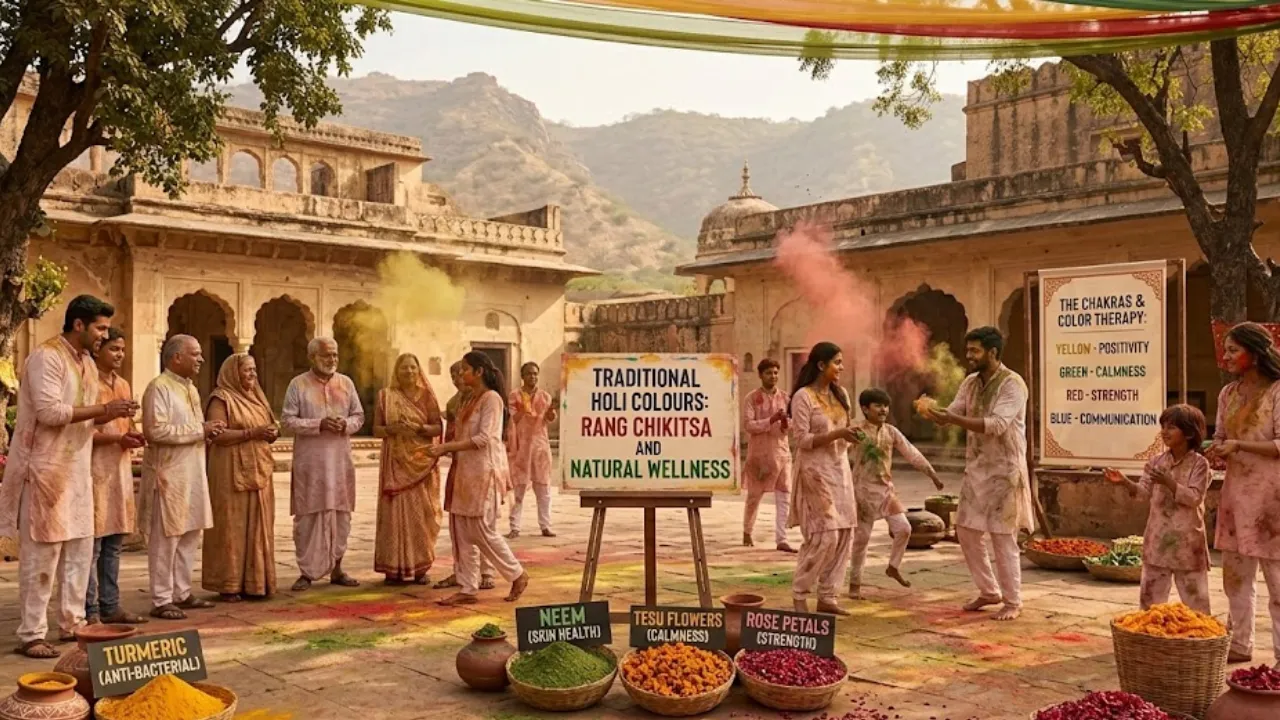
Holi is not only a festival of joy. It has deep cultural meaning in India. For centuries people played with natural colours made from flowers and herbs. Ayurveda texts mention Rang Chikitsa which means color therapy. This practice believes colours affect body energy centers. These centers are called chakras in traditional knowledge. Ancient healers used specific colours to balance emotions. Yellow for positivity. Green for calmness. Red for strength. History shows that early Holi colours were plant based and gentle on skin.
How Color Therapy Influences Body Energy
Experts explain that color therapy works through light and vibration & every colour has a specific wavelength. When colour touches skin or eyes, brain reacts. This reaction can influence mood and energy level. Rang Chikitsa believes each chakra connects with a colour. For example blue links with throat energy. Green connects with heart energy. Modern wellness experts say bright colours can lift mood quickly. Hospitals even use colour shades in rooms for calming effect. Research shows visual exposure to soft colours reduces stress in many patients.
Traditional Holi Colours' Antimicrobial Benefits
Old Holi traditions used turmeric, neem, rose petals, and tesu flowers & these natural ingredients have known antimicrobial properties from which turmeric fights bacteria, Neem supports skin health, Rose water soothes irritation. In past villages people played Holi during seasonal change. Experts believe natural colours helped protect skin from infections common in spring. Scientific studies confirm turmeric and neem contain compounds that reduce microbial growth. Doctors clarify that modern chemical colours do not offer these benefits. Natural powders are safer and closer to original practice.
What Modern Science Says About Rang Chikitsa
Medical science does not fully accept chakra energy theory. However colour psychology is widely studied. Psychologists confirm colours influence emotions. Bright shades increase alertness. Soft tones create relaxation. Dermatologists say plant based Holi colours are less harmful compared to synthetic ones. Some wellness centres now offer colour therapy sessions using light panels. They claim improvement in mood and focus. Experts stress more research is needed on energy centers. Still facts show safe natural colours support skin and mental comfort.
Public Views And Changing Holi Practices
Many families are returning to herbal Holi colours. Online trends show people prefer organic gulal for health reasons. Parents express concern about chemical powders harming children’s skin. Some wellness groups promote Rang Chikitsa workshops during Holi week. They explain colour meaning along with celebration. Environmental activists also support natural colours to reduce pollution. Surveys show rising demand for eco friendly Holi products. Experts agree combining tradition with safety keeps festival joyful and healthy. Holi remains symbol of renewal, now linked again with natural healing values.
