



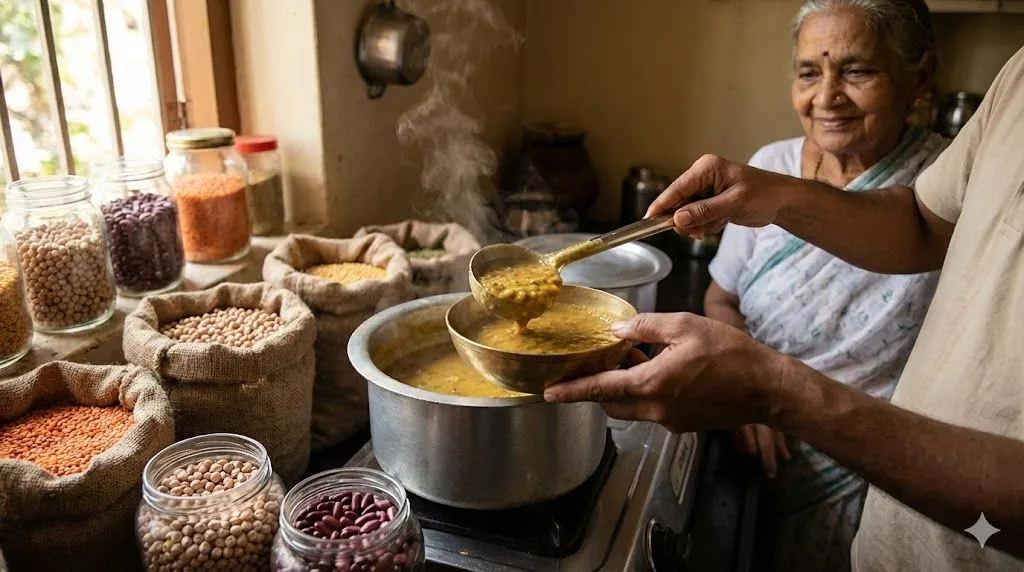
Have you noticed dal coming back to the centre of meals? Pulses like lentils, beans, and chana are now called budget proteins. Nutrition experts say they give strong protein, fibre, and minerals. Families ask, why spend more on meat daily? Pulses cost less and last longer. India has used pulses for centuries. Dal, rajma, chole, and moong were daily foods earlier. Over time, packaged foods replaced them. Now prices and health worries are pushing people back. Many online comments say, pulses feel filling and comforting again.
History Shows Pulses Were Always India’s Protein Backbone
India’s food history is deeply linked with pulses. Ancient texts mention lentils as staple food. Farmers grew them because they needed less water. Pulses improved soil quality too. Before modern refrigeration, plant protein was reliable. Meat was occasional. Doctors say earlier generations stayed strong with dal and roti. Urban diets later shifted toward costly proteins. This caused imbalance. Now plant-forward budgeting brings old wisdom back. People online say, our grandparents were right. Pulses supported health without stress. History proves protein does not always need high cost or fancy packaging.
Why Pulses Fit Today’s Tight Household Budgets
Food prices are rising everywhere. Families are adjusting grocery lists. Pulses help stretch budgets. One kilo feeds many meals. Beans store well without fridge. This reduces waste. Nutritionists say pulses give steady energy. They control sugar levels. People ask, can pulses replace meat fully? Experts say yes for most meals. Social media comments show people sharing pulse recipes proudly. Rajma bowls, dal salads, sprout chaat are trending. Plant-forward budgeting is not about sacrifice. It is about smarter choices. Pulses support both nutrition and monthly savings.
Health Experts Support Plant-Forward Protein Choices
Doctors say pulses lower risk of heart disease. Fibre improves digestion. Protein supports muscles. Unlike processed foods, pulses are natural. People worry about protein myths. Experts clear doubts. Combining pulses with grains gives complete protein. Dal with rice is science, not habit. Fitness trainers now suggest lentils for strength. Online discussions praise plant protein for gut health. Many comment they feel lighter after switching. Health experts also note pulses help weight control. Plant-forward budgeting supports long term wellness. It aligns health goals with simple everyday cooking practices.
Sustainability And Public Opinion Around Pulses
Environmental experts praise pulses for sustainability. They use less water than animal farming. Carbon impact is lower. This matters today. Young people talk about climate friendly food. Pulses fit that goal. Public comments show pride in choosing plant protein. Some ask, is this trend only for vegetarians? Experts say no. Even non vegetarians are reducing meat days. Pulses balance plates. Governments also promote millets and pulses. This supports farmers and food security. Plant-forward budgeting is becoming a social choice. It connects money, health, and planet together.
