



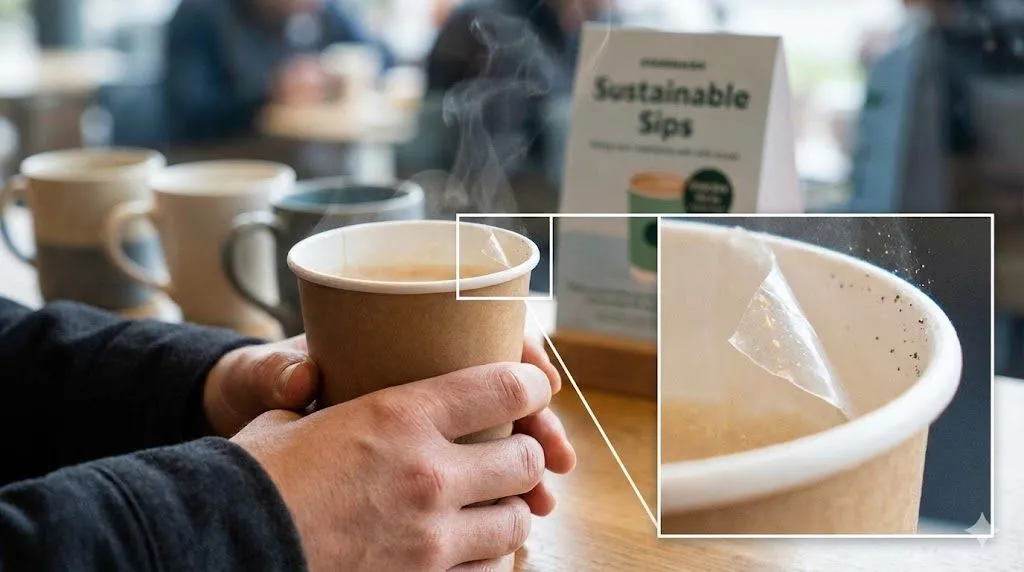
Did you ever sip hot coffee and think plastic might be entering your body? Sounds shocking? Scientists confirm it happens. Many paper cups contain thin plastic lining. Heat releases tiny plastic bits called microplastics. These particles are smaller than dust. They mix with drinks silently. Earlier people used clay cups or steel tumblers. Those did not release plastic. Modern convenience items changed that habit. Studies show daily use items like lids, straws, and containers also shed particles. People online often react with surprise when they learn this hidden exposure fact.
How Coffee Cups Release Microplastics Into Drinks
How can a simple cup release plastic? The answer is temperature and material. Disposable cups are lined with polyethylene plastic & when hot liquid touches the surface, the layer weakens. Microscopic fragments break away. These mix into tea or coffee. Lab tests found thousands of particles can release from one hot drink container. This does not change taste. So people never notice. Experts explain that repeated exposure matters more than one time use. Regular users of takeaway drinks may unknowingly consume more microplastics than occasional users.
What Science Says About Microplastics Health Effects
Do these tiny plastics harm health? Researchers are still studying long term impact. Early findings show microplastics can enter bloodstream and tissues. Some tests detected them in lungs and digestive system. Scientists worry because plastics contain chemicals. Certain compounds may disturb hormones. Others may cause inflammation. Animal studies show cell irritation after exposure. Human research is ongoing. Doctors say risk depends on quantity and frequency. They advise reducing avoidable sources. Awareness is growing as more lab reports confirm that these particles are present inside the human body.
Everyday Items That Also Add To Plastic Intake
Think coffee cups are the only problem? Not really. Many daily products release microplastics. Plastic bottles shed particles when reused often. Food containers release them when heated. Synthetic clothes shed fibres during washing. These fibres enter water systems. Even chopping food on plastic boards may add particles. Earlier generations used glass, wood, and metal items. Those materials were safer in this aspect. Lifestyle changes increased plastic contact. People now encounter plastic fragments from multiple sources & this happens every day without realising it.
Practical Ways To Reduce Microplastics Exposure Daily
Can a person avoid microplastics fully? Experts say no, but reduction is possible like you can choose steel or glass cups for hot drinks. Avoid heating food in plastic boxes. Use wooden or steel kitchen tools. Drink filtered water. Limit single use packaging. Carry personal mug while travelling. These small steps lower intake. Health specialists stress prevention is better than cure & awareness helps people make safer choices. Understanding sources is first step. Once habits change, daily exposure can drop significantly, according to environmental health researchers.
