



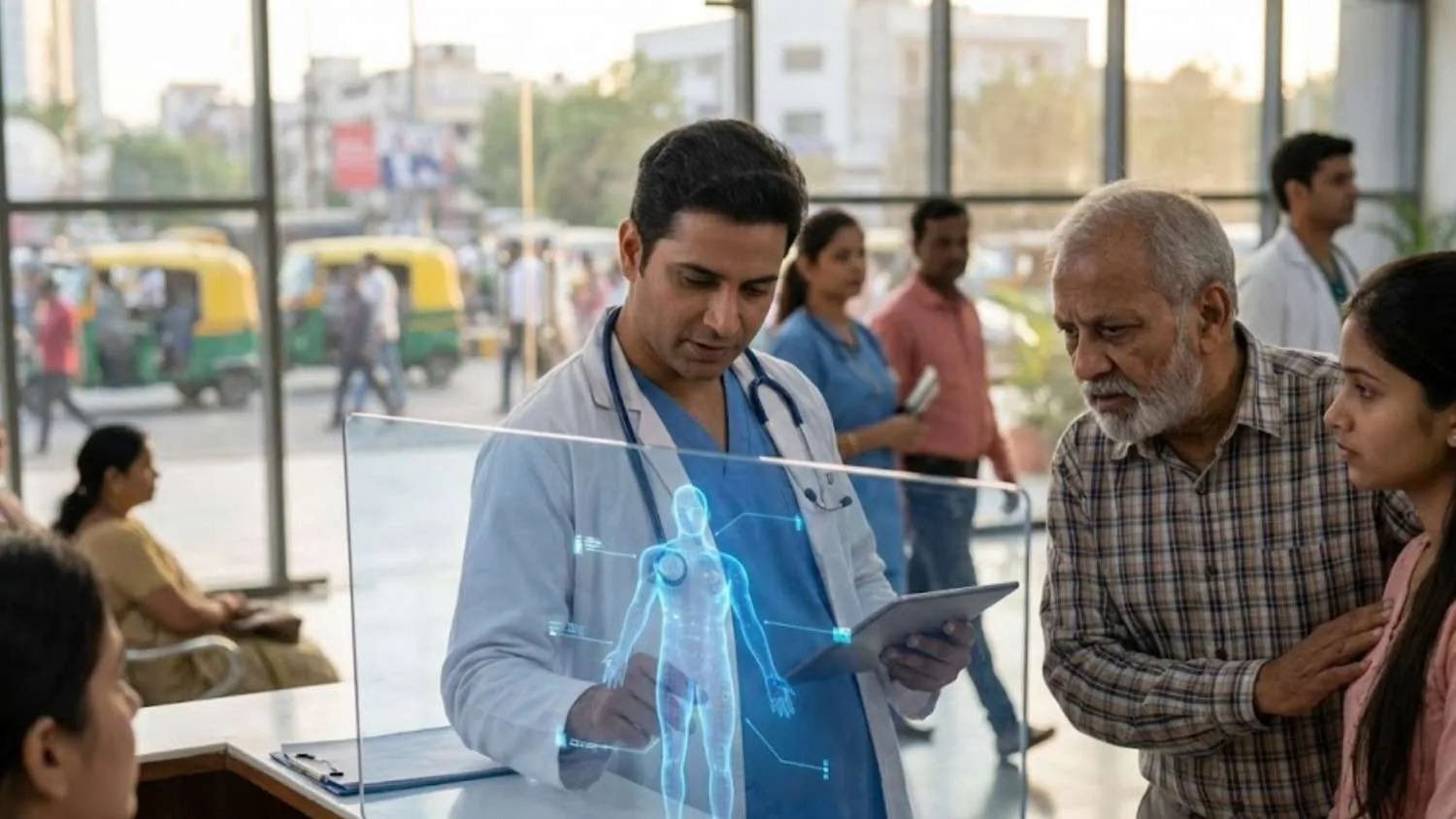
Have you ever thought, what if doctors could see your future health? All this before you fall sick? What if your body had a digital copy that could warn you early? Sounds unreal, right?
But this is not a movie scene or tech fantasy. This is already happening in India. From big hospitals to health startups, digital twin technology is slowly entering real lives.
People are asking questions. Can a virtual body really save a real one? Can technology understand humans better than humans themselves? Let’s see what is actually going on in healthcare.
What Is a Digital Twin and Why Is Everyone Talking About It?
What exactly is a digital twin? Doesn't it sound like sci-fi? right? But it is real and already in use. A digital twin is a virtual copy of a real object or person.
In healthcare, it means a digital version of a human body or organ. Doctors feed it real data like scans, reports, and daily health numbers. Then they ask questions. What if we try this medicine? What if we do this surgery?
The twin gives answers before touching the real patient. This idea started in engineering years ago. Now India is using it for health care, slowly but seriously.
How Digital Twins Work Inside the Human Body?
So how does this actually work? Is it magic? No, it is data and smart software. Doctors use MRI, CT scans, blood reports, and medical history. Sensors and wearables also help.
All this builds a virtual patient. This digital body reacts like the real one. If a drug is tested, the twin shows possible results. If surgery is planned, doctors can practice first.
The aim is simple. Fewer risks. Better decisions. Less guesswork. This is why people call it personalised medicine. No one-size-fits-all anymore? Your body. Your data. Your treatment.
Where India Is Already Using Digital Twin Technology?
Is India really using this or just talking? The answer is yes, it is happening. Big medical centres are leading the way. In places like Puducherry and Chennai, doctors are creating digital brain and heart models. These are used to plan complex surgeries.
Some teams can prepare a virtual organ in under an hour. Hospitals also use simpler digital twins to manage beds and patient flow. Startups focus on lifestyle diseases like diabetes. They track daily health data and guide food and habits. From surgery rooms to mobile apps, digital twins are quietly working behind the scenes.
Digital Twins in Cancer, Heart Care, and Chronic Diseases?
Can digital twins really help in serious illness? Doctors believe so. In cancer care, researchers test how a tumour may react to different medicines. This reduces trial and error. In heart cases, surgeons rehearse difficult procedures on a virtual heart first. This improves safety. For diabetes and metabolic problems, full body digital twins track sugar levels, sleep, and activity. The system suggests changes before problems grow. It feels like gossip with science. What if your body warned you early? What if treatment was planned just for you? That is the promise here.
Growth of Digital Twin Healthcare in India?
Why is this growing so fast in India? One big reason is digital health push. Health IDs and digital records make data easy to use. The healthcare digital twin market is growing quickly. Experts expect strong growth by 2030. Government systems support this digital base.
Research institutes and private hospitals are investing more. Tech companies are also stepping in. It is not cheap, yes. It needs strong computers and skilled people. But the direction is clear. India wants smarter healthcare. They do not just want more hospitals. Digital twins fit that dream well.
Challenges, Questions, and the Road Ahead?
Is everything perfect? Of course not. Rural areas still struggle with internet and systems. The cost is high for smaller hospitals. Trained experts are limited. Data privacy is also a big question.
Who owns your digital body? Still, progress is steady. Digital twins are moving from labs to real life. The big question now is how fast everyone can access it.
Will it stay elite or reach common people? If costs drop and training improves, this technology could change Indian healthcare deeply. The virtual body may soon become a trusted health partner.
