


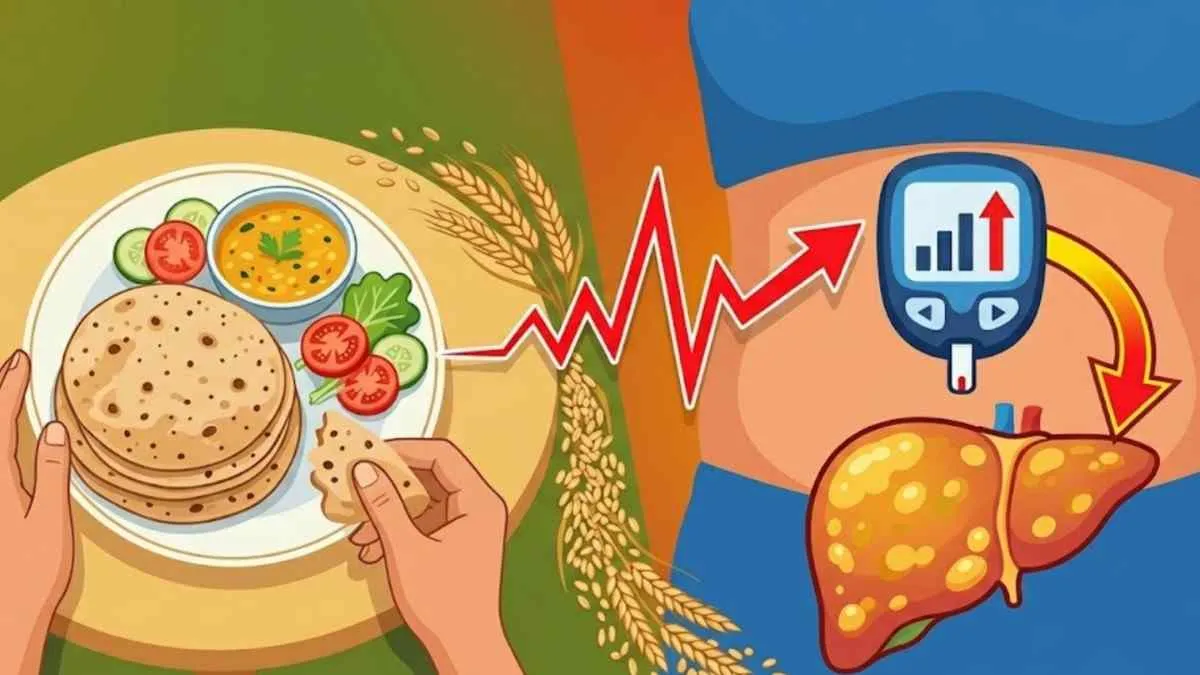
Many people across India rely on wheat roti as a daily staple without thinking twice. It is seen as simple, filling and healthy. But can too much wheat roti every day quietly affect your blood sugar and liver health? A doctor’s explanation answers this question for health-conscious people.
The concern is not about stopping it completely, but about how much and how often we consume wheat roti in our daily meals. Experts say balance and variety may matter more than we think when it comes to long-term health.
Wheat Roti And Blood Sugar Spike Risk
In a video shared on YouTube, Doctor Shubham Vatsya explained that wheat is a complex carbohydrate and naturally contains gluten. He clarified that not everyone needs to avoid gluten completely. However, the problem begins when a person eats only or mostly wheat roti in every meal.
He said that excessive dependence on wheat roti can lead to sudden blood sugar spikes after eating. Over time, repeated spikes in insulin levels may contribute to weight gain and even increase the risk of fatty liver disease. This happens because high carbohydrate loads can affect how the body processes sugar.
The doctor further suggested that people should not completely fear wheat, but should reduce pure wheat consumption if it dominates their diet. He also emphasized the importance of glycemic index, which measures how quickly food raises blood sugar levels. Lowering this response can help reduce metabolic stress on the body.
Healthier Alternatives Instead Of Wheat Roti
According to the doctor, replacing or mixing wheat roti with other grains can be a smarter approach. For people with diabetes, jowar roti is considered a better option due to its lower impact on blood sugar. For those needing more protein, bajra can be helpful. Ragi is often recommended for individuals with iron deficiency.
Instead of fully avoiding wheat roti, experts suggest mixing grains to reduce its glycemic impact. This simple change can help slow down sugar absorption and reduce insulin spikes in the body. Even small dietary adjustments can support better long-term metabolic health.
Nutrition experts also support the idea of dietary variety. Whole grains like millet-based rotis generally provide more fiber and micronutrients compared to a wheat-only diet. Fiber helps improve digestion and keeps blood sugar levels more stable after meals.
Balanced Diet Is The Real Key
Health experts agree that wheat roti is not harmful by itself, but overconsumption without variety may create problems over time. Portion control, balanced meals, and grain diversity are key factors in maintaining good health.
In the end, the goal is not to fear food but to understand it better. A balanced plate with different grains, vegetables, and protein sources can help maintain energy, reduce health risks, and support overall well-being.