



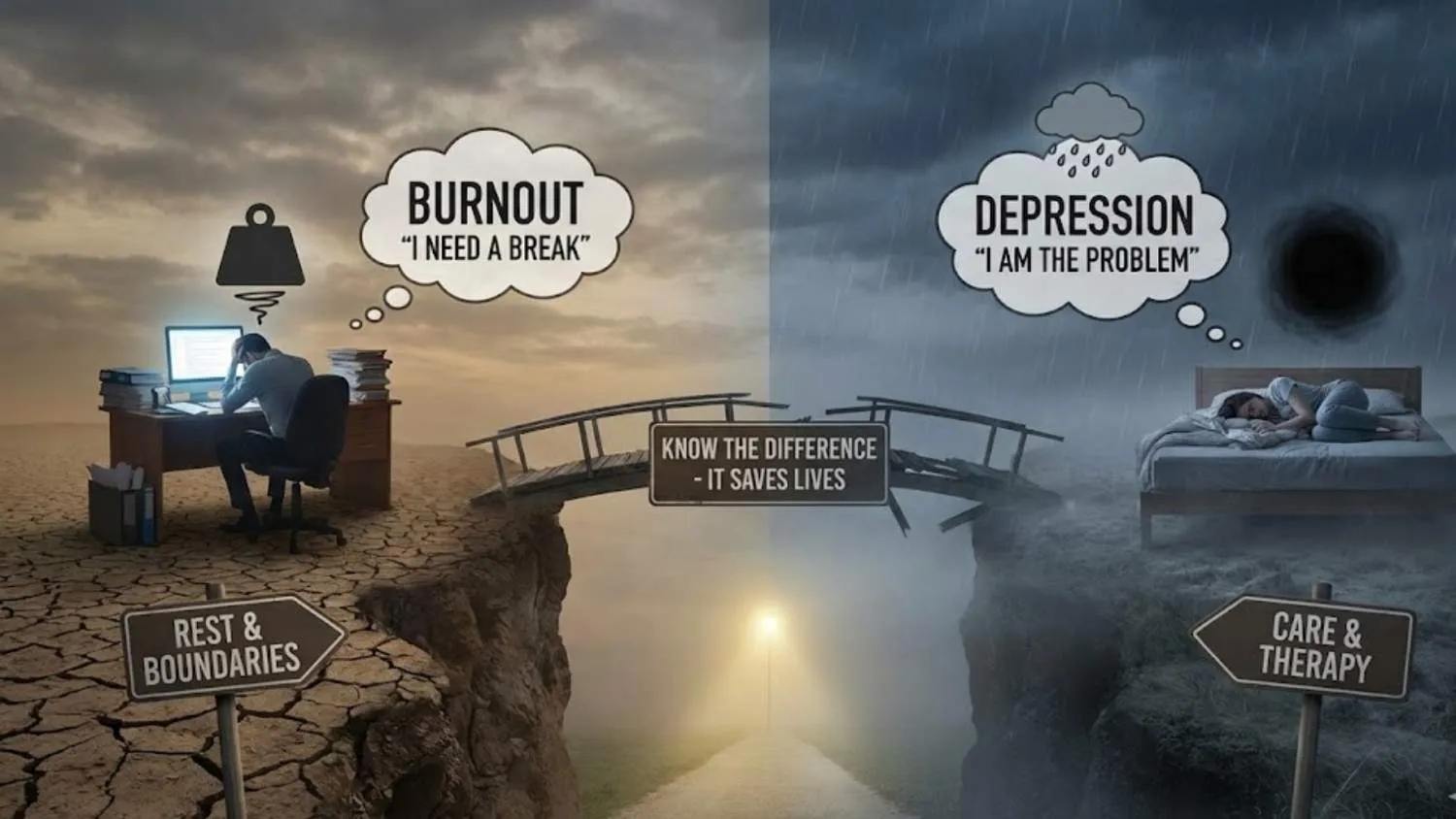
Do you wake up feeling tired even after sleeping well? Do simple tasks feel heavy for no clear reason? Some days you feel confused about your own emotions. You ask yourself what is wrong with me. Is it stress or something deeper? Many people feel this but cannot name it. Life keeps moving fast. Work pressure grows. Expectations never stop. In this noise, burnout and depression quietly enter. They feel similar at first. That confusion makes it harder to understand what your mind is really asking for.
What Burnout Really Means in Daily Life
Burnout is not laziness. It is deep tiredness that does not go away with sleep. It often starts with work or studies. People feel exhausted every morning. They feel no energy to face emails or books. Small tasks feel heavy. Burnout grows slowly. Many ignore it thinking it is normal pressure. In India, long work hours and exam stress make burnout common. Doctors first spoke about burnout in the 1970s. It was linked to job stress. Today, students and homemakers also feel it. Burnout mostly stays connected to one area of life. It may be due to work or college or responsibility. Outside that area, a person may still feel okay.
Depression Is More Than Just Feeling Sad
Depression is not only sadness. It is a medical condition. It affects the mind and body together. A person may feel empty for weeks. Nothing feels enjoyable. Even food and music lose taste. Sleep becomes disturbed. Appetite changes. Some sleep too much. Some cannot sleep at all. Depression has been mentioned in Indian texts and global medicine for centuries. Earlier, it was called deep sorrow. Today, doctors understand it better. Depression affects all parts of life. Home. Work. Relationships. It does not depend on one problem. It stays even when life looks fine from outside.
Key Differences Between Burnout and Depression
Burnout and depression may look similar. But they are totally different. Burnout is linked to stress. Remove the stress and relief may come. Depression stays even without stress. Burnout makes people feel tired and irritated. Depression brings hopelessness. Burnout improves with rest and breaks. Depression needs medical help often. Burnout thoughts are like I need a break. Depression thoughts are like I am the problem. Burnout affects motivation. Depression affects self worth. These signs help people understand what is hurting them. Knowing the difference is important. Wrong treatment can delay healing.
How Indian Society Often Confuses Both Conditions
In India, mental health is still misunderstood. Many elders say be strong. They say others have it worse. This makes people hide pain. Burnout is called weakness. Depression is called drama. This confusion delays help. Offices reward overwork. Students are pushed to perform nonstop. Emotional pain is ignored. Earlier generations did not talk openly about mental health. Today, awareness is growing slowly. Doctors and counselors speak more. Social media also spreads information. Still, many people mix burnout and depression. This leads to self blame. It also leads to silence. Silence makes things worse.
Why Correct Understanding Can Change Lives
Knowing whether it is burnout or depression can save time and health. Burnout needs rest. It needs proper Boundaries and Support. Depression needs care and Therapy. Sometimes medicines may be needed. Both need kindness. Both need acceptance. History shows mental health improves when people talk. Countries that invested in awareness reduced suffering. India is moving in that direction. Schools now discuss mental health. Workplaces start wellness talks. When people understand their pain, they seek help early. Early help brings faster recovery. Life feels lighter again. Energy slowly returns. Hope finds space. Understanding is the first real step forward.
