



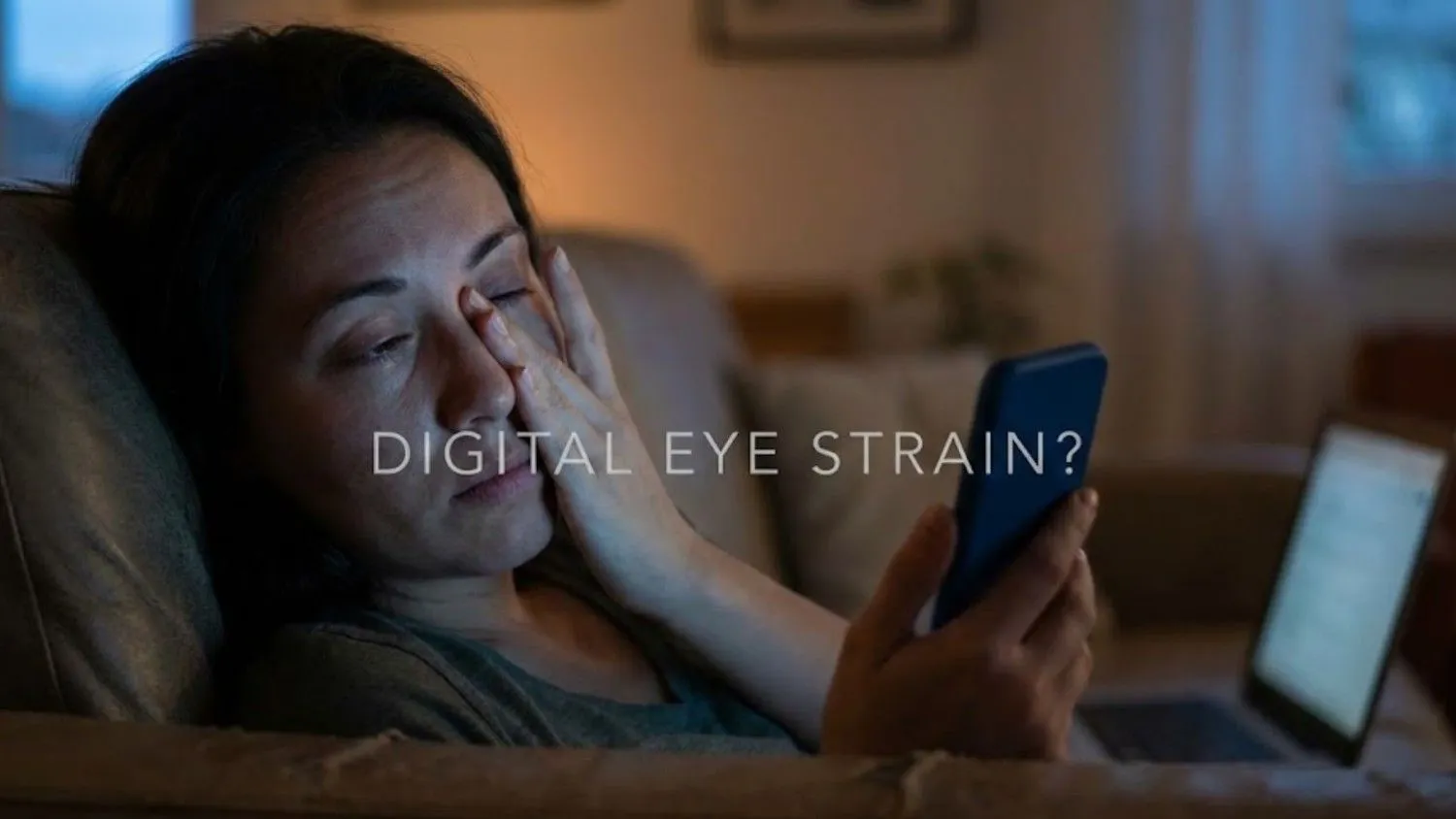
Have you ever closed your phone and felt your eyes burning a little? Or maybe they feel heavy, tired, and dry, even when you did nothing “hard”? You blink fast. You rub your eyes. Still not okay.
Then a question pops up. Is it just tiredness or is the screen doing something wrong? Almost everyone using mobiles today feels this but rarely talks about it. From students to office workers, the same complaint keeps coming back. Eyes are working all day, but are we even noticing?
Screens Have Changed How Our Eyes Live
Screen time was limited ten years ago. Today, phones wake us up. And phones put us to sleep too. Work, studies, shopping, and even family chats happen on screens. Blue light is a high energy light released by phones, laptops, and LED screens.
Doctors say human eyes were never designed for such long exposure. Eye strain complaints have increased in India, especially among students and office workers. Dry eyes, burning, and blurry vision are now common daily problems, not rare medical cases.
What Blue Light Actually Does to Your Eyes
Blue light does not burn the eyes instantly. It works slowly. It reduces blink rate, which dries the eye surface. It forces eye muscles to stay tight for long hours. Over time, this causes digital eye strain. Symptoms that are seen are headaches and watery eyes. There are issues like pain behind the eyes, and trouble focusing.
Some studies also link excessive blue light exposure to disturbed sleep cycles. When sleep is poor, eyes do not recover fully. This creates a daily loop of tired eyes and weak focus.
India’s Screen Explosion and Rising Eye Problems
India saw a massive rise in screen use after affordable smartphones and cheap internet. Online classes during the pandemic pushed children onto screens early.
Eye doctors started reporting younger patients with vision complaints once seen only in adults. Rural and urban areas both felt this change. Earlier, eye strain was linked to reading books in dim light.
Today, bright screens cause similar stress. The problem is not technology itself. The problem is unbroken screen exposure without rest or eye care habits.
Is Blue Light Permanently Damaging Vision
Here is the honest answer. There is no strong proof that blue light alone causes permanent blindness. But it does worsen eye comfort and daily vision quality.
Long term strain can increase chances of dry eye disease. People with weak eyesight may feel faster vision fatigue. Children may develop focusing problems.
Doctors warn that discomfort ignored for years can reduce work efficiency and learning ability. The damage is more about daily function than sudden vision loss. Still serious. Still avoidable.
What Eye Experts Now Recommend for Screen Users
Doctors now focus on screen habits, not fear. The 20 20 20 rule is widely advised. Every 20 minutes, look 20 feet away for 20 seconds.
Blink consciously. Adjust screen brightness to room light. Blue light glasses help some people. But they are not magic. Proper sleep matters more.
Annual eye check ups are important even without glasses. Screens are here to stay. Protecting eyes means using technology with discipline, not panic.
