



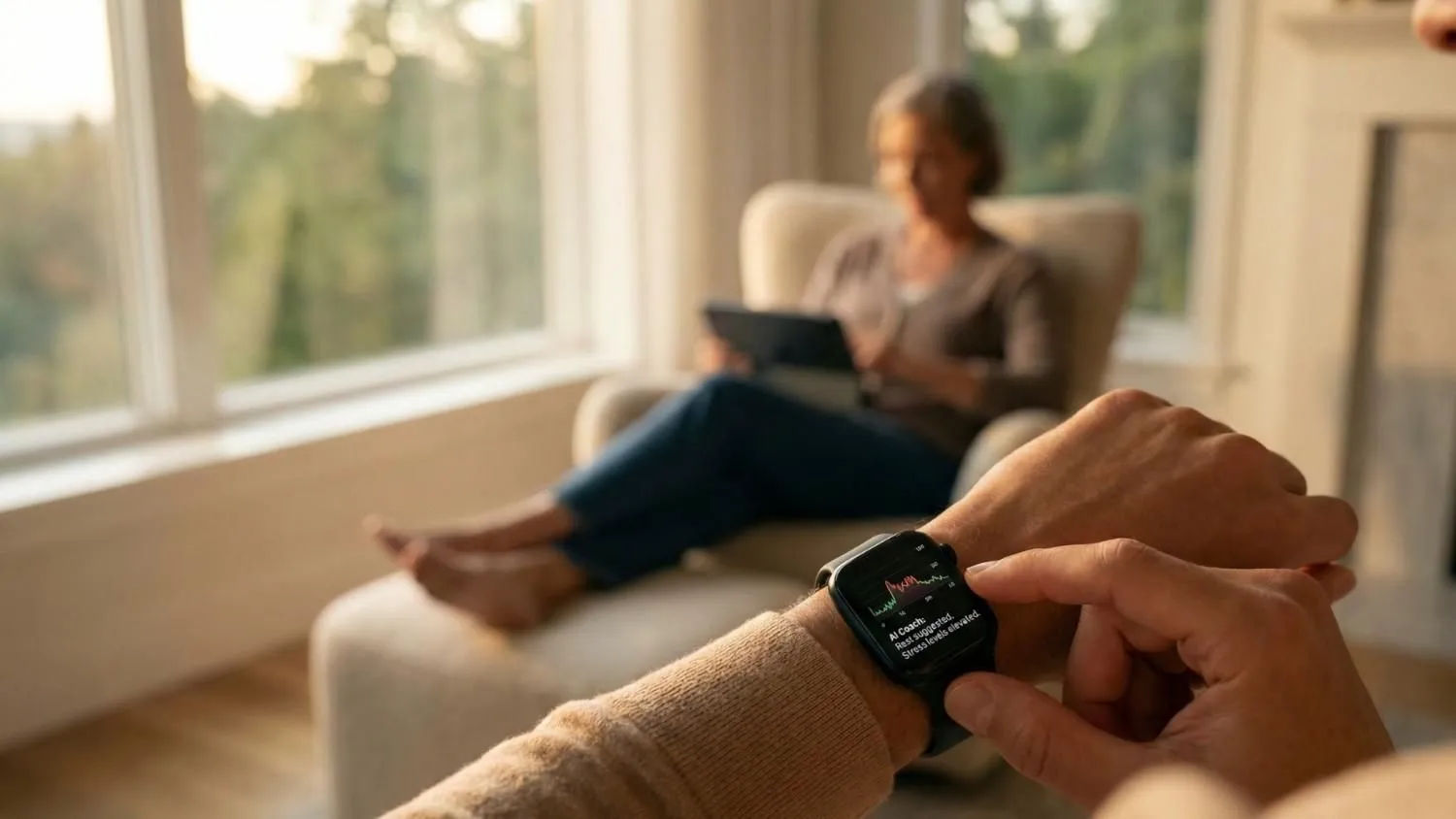
Have you noticed your watch doing more than counting steps? AI health coach technology is moving fast. Earlier, artificial intelligence worked silently inside hospitals and labs. Now it sits on wrists and fingers. Smartwatches and smart rings collect heart rate, sleep, skin temperature, and movement data. AI reads this data in real time. It then gives simple advice. Drink water. Rest today. Check sugar levels. This shift matters. Health care is no longer only about doctors and clinics. It is slowly becoming personal and constant.
From Data Collection To Real Advice
What makes an AI health coach different from old fitness apps? Earlier tools only showed numbers. Steps walked. Hours slept. Calories burned. AI now explains what those numbers mean. It connects patterns. It notices changes early. If sleep drops for many nights, it alerts stress risk. If heart rate stays high, it flags fatigue. These insights come instantly. No appointment needed. No waiting room. Many users say it feels like a quiet guide. Always watching. Always suggesting. Never shouting. This change is making health advice faster and easier.
A Real Case People Are Talking About
Can AI really help when doctors cannot? One case shared online caught attention. A person had a skin issue for years. Small painful spots appeared on one body area. Doctors checked. Medicines failed. Tests showed nothing serious. Out of frustration, the person uploaded a photo to an AI health platform. The AI analysed the image. It suggested a common medicated powder. The person followed it. Relief came within weeks. Comments exploded. People asked, is AI smarter than doctors? Experts say AI does not replace doctors. It fills gaps when patterns are missed.
Wearables Meet Visual AI Diagnosis
Why are images becoming important in AI health coaching? Modern AI can read photos. Skin texture. Colour changes. Swelling. Combined with wearable data, advice becomes sharper. Smart rings track body stress. Watches track recovery. When images are added, AI connects the dots. Is a rash linked to sweat? Is stress slowing healing? This mix is powerful. In India, where doctor access varies, such tools are growing fast. People in small towns use AI apps for first guidance. Many say it saves time. Others say it gives confidence before seeing a doctor.
Public Reactions, Trust, And The Road Ahead
Are people ready to trust AI with health? Online comments show mixed feelings. Some call AI a lifesaver. Some fear wrong advice. Many say it should guide, not decide. Health experts agree. AI health coach systems work best as support tools. They help users understand bodies better. They push early action. They reduce delay. In India, rising lifestyle diseases make this important. Wearable AI is not magic. It is math, patterns, and learning. Used carefully, it may reduce suffering quietly. Ignored, it remains just another gadget.
