



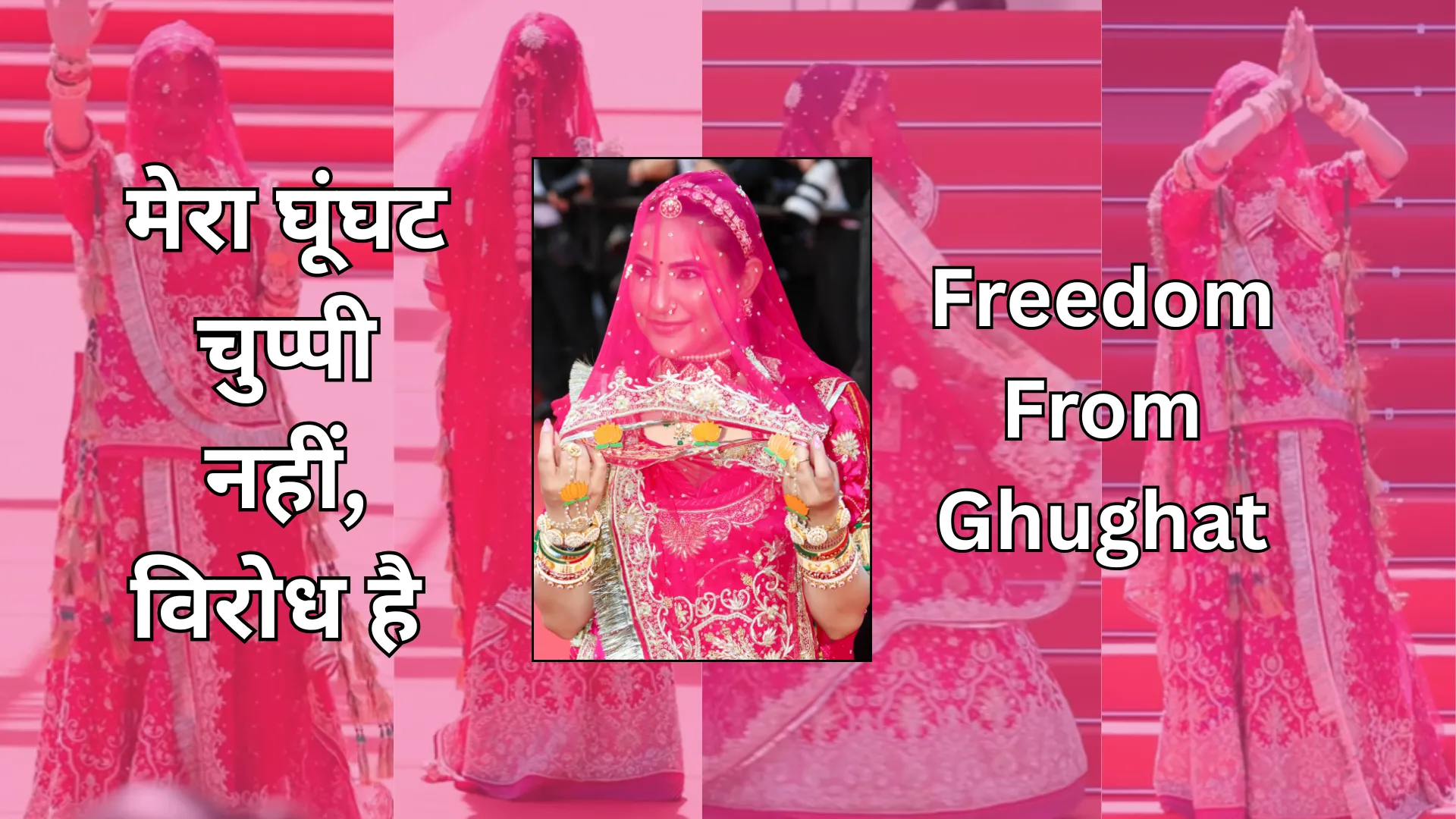
Model and influencer Ruchi Gujjar became one of the most discussed Indian names online after her Cannes appearance went viral where she wore a bright red traditional Rajasthani outfit with heavy jewellery and a long ghunghat covering her face. Videos and photos spread quickly across X and Instagram. Many users said her outfit looked royal and different from modern red carpet fashion. Some people even claimed she received more attention than Bollywood actress Alia Bhatt. However many users also questioned if the viral videos were edited to look more dramatic and attention grabbing.
She is Ruchi Gujjar.
— Chota Don (@choga_don) May 19, 2026
She wore Rajputi Poshak at Cannes, the most beautiful thing a woman can wear. She got 5 times more Cannes paparazzi attention compared to Alia.
But still, no feminist is praising her because she is not wearing a revealing, tight outfit and showing… pic.twitter.com/JqfWKxZXRV
Rajasthani Poshak Or Rajputi Poshak Debate Starts Online
Soon after the videos became popular, another argument started online. Some users called the outfit “Rajputi Poshak” while others strongly said it was “Rajasthani Poshak” and belongs to many communities of Rajasthan. One user wrote, “Rajasthani poshak hai, caste mat lao isme.” Another comment said, “Yeh Rajasthan ki joint heritage hai.” Many people also shared history related to Rajasthan’s traditional clothing. They explained that colourful lehengas, odhnis and heavy jewellery became famous in desert areas because bright colours stood out in the dry climate of Rajasthan for hundreds of years.
Ruchi Gujjar's Ghunghat Becomes Biggest Point Of Controversy
The biggest debate was about the ghunghat covering her face. Some users praised it as a symbol of Indian tradition and respect. One comment said, “Bharatiya nari ki asli pehchaan.” Another supporter wrote, “Culture ko global stage par proudly dikhaya.” But many people strongly disagreed. Critics said face covering should not be promoted internationally in modern times. Several users claimed ghunghat became common during Mughal invasions for women’s protection and was not part of ancient Indian culture. One viral comment said, “Ghunghat was not our original culture, it came later because of invasions.”
Ruchi Gujjar’s Caption Created Even More Confusion Online
The controversy became bigger after people noticed Ruchi Gujjar’s reported caption related to “Freedom From Ghughat.” This confused many viewers because she wore the ghunghat while also speaking against it. Some social media users accused her of using culture only for publicity. One Instagram user commented, “Culture ka use bhi kiya aur uska virodh bhi kiya.” Another person wrote, “Spotlight chahiye bas.” Supporters defended her and said she was trying to start a conversation about women’s freedom and choice while some users believed the ghunghat in her look was symbolic and meant to show both beauty and restriction together.
Internet Divided Between Pride, Feminism And Publicity Claims
As the debate continued, people from different ideologies gave completely opposite reactions. Some feminist users called the look “misogyny” and “symbol of patriarchy.” Others argued that feminism should also respect a woman’s choice to wear traditional clothing. A few people compared the ghunghat debate with discussions around hijab and burqa. One user wrote, “If this was hijab, reactions would be very different.” Many users also questioned whether Cannes should focus more on films instead of fashion statements. Another comment said, “It’s a film festival, not a fancy dress competition.” Despite criticism, many fans still praised Ruchi Gujjar’s confidence, styling and ability to make people talk across the internet.
