



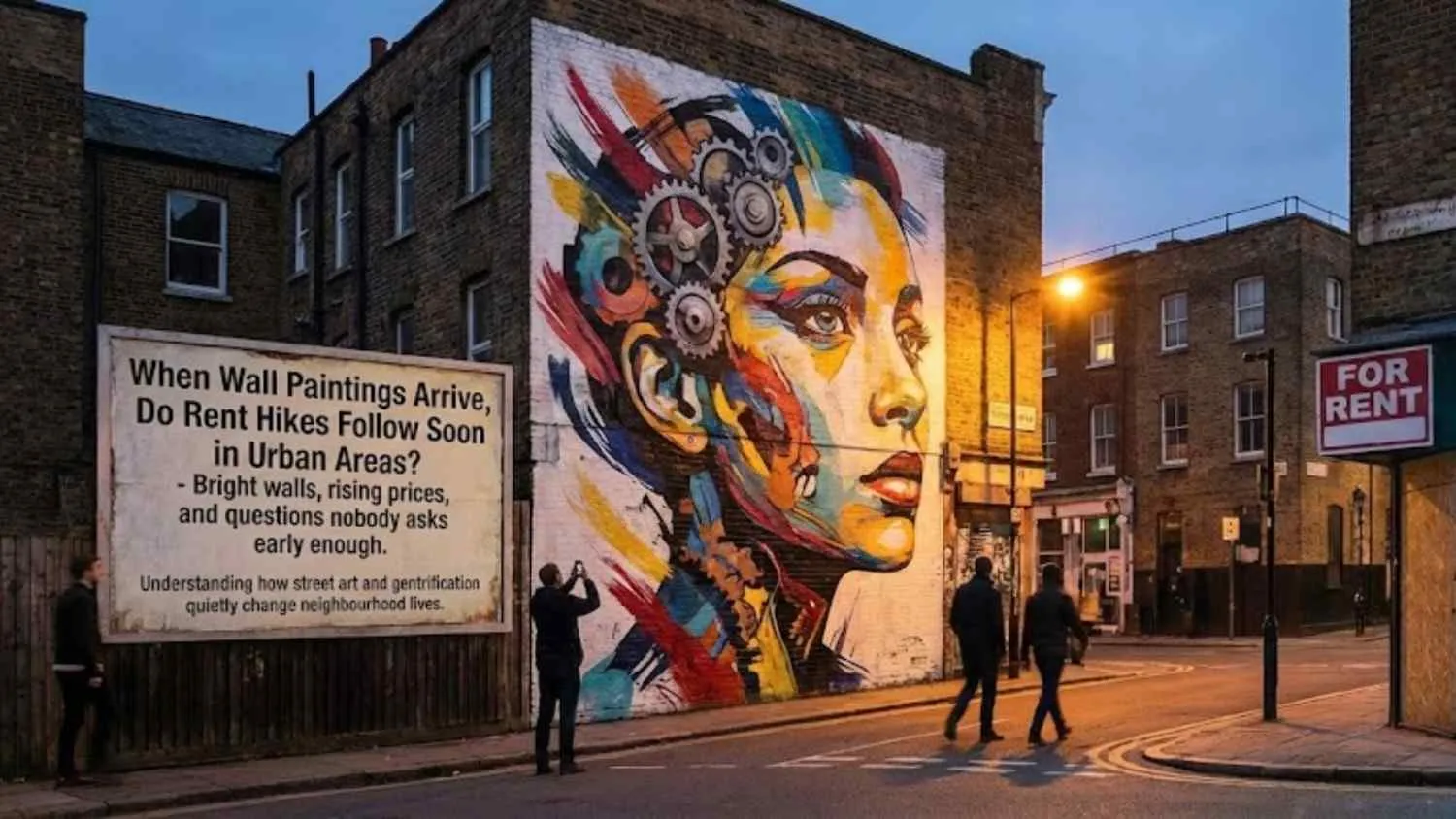
Have you noticed fresh wall paintings suddenly showing up near your home? Bright faces, bold words, trendy colours. People stop to click photos. Social media loves it. Cafes open nearby.
But then a question comes. Why now? This pattern has been seen in many cities. Street art often comes before big changes.
Earlier, these walls were plain or broken. Now they look cool. Artists say it is expression.
Locals wonder if this is a sign. Is art just art, or is it the first signal of gentrification?
How Street Art Started as Protest and Voice of the Streets
Street art did not begin as decoration. It began as protest. In the 1970s, graffiti in New York spoke about anger and identity. Artists painted walls to be seen. They had no galleries. Cities tried to erase it.
Over time, street art became popular. Famous names emerged. Governments started protecting murals. What was once illegal became trendy.
In India too, street art grew around social messages. But slowly, big brands noticed its power. Art that once questioned power started attracting money and attention.
When Art Makes Areas Look Cool and Investors Step In
When walls become colourful, areas start looking safe and modern. Visitors come. Bloggers write. Real estate agents notice. This is where gentrification begins.
Gentrification means richer people move into older areas. Property prices rise. Rents increase. Local families feel pressure. This has happened in London. Then it happens in Berlin and New York. Now Indian cities do it too.
Cities like Mumbai and Delhi are seeing it too. Street art becomes a signal. It tells investors that the area is changing. Art may not cause gentrification, but it often walks before it.
Do Local Residents Benefit or Get Pushed Out Slowly?
Supporters say street art brings pride and tourism. Some local shops get more customers. Streets feel lively.
But there is another side. Rent goes up. Old shops shut down. Long time residents struggle. They did not ask for change. They just wanted better services.
Many studies show poor families are forced to move after gentrification. The art stays. The people go. This creates anger. Locals ask why beauty came at such a cost. The wall looks new. The community feels lost.
Can Street Art and Development Exist Without Harm?
Cities now debate this openly. Can art improve areas without pushing people out? Some places involve local artists and residents together. Murals tell local stories. Laws protect rent control.
History shows that ignoring people leads to conflict. Street art can be powerful. It can warn. It can heal. But when used only for branding, it becomes a signal of takeover. The question remains.
Are cities listening early? Or will colourful walls keep arriving before communities are asked what they really want?
