



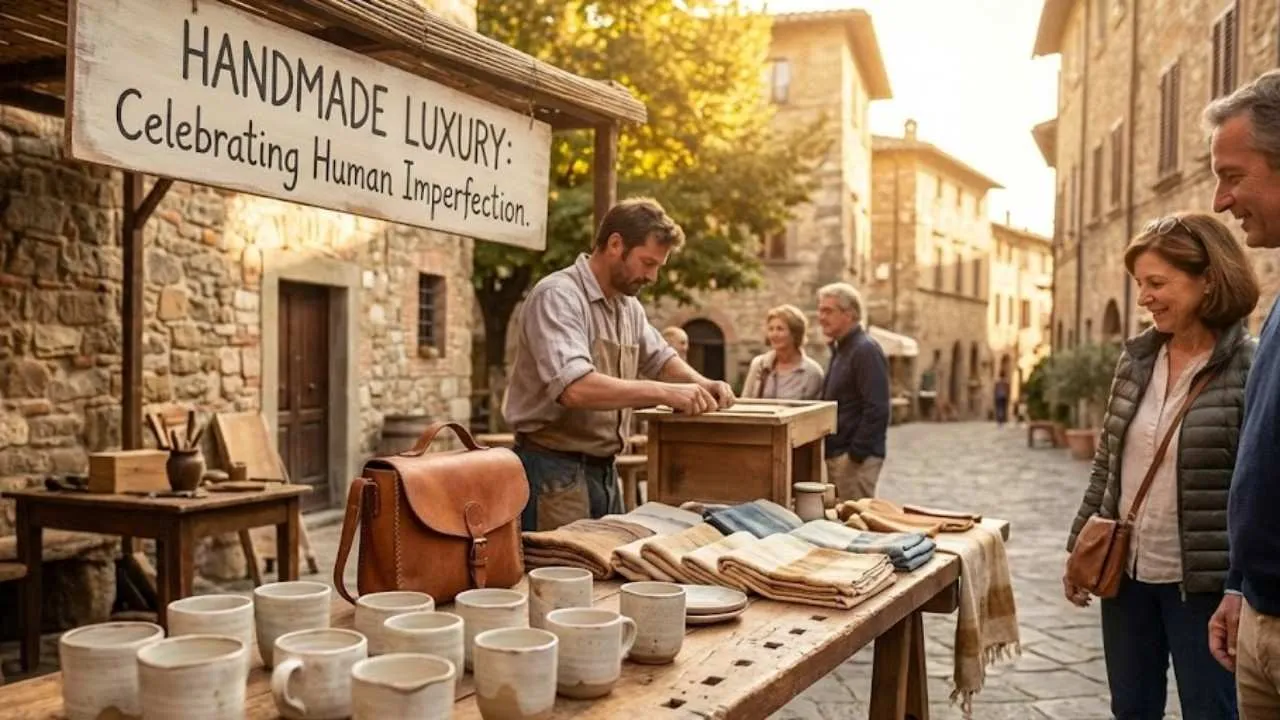
Have you noticed how handmade items are now called premium? A slightly uneven cup. A hand-stitched bag. A table with visible wood marks. Earlier, people rejected these. Now, they pay more for them.
Why this change?
The world is full of perfect machines. Everything looks the same. Phones. Clothes. Furniture. Handmade products feel different. They show effort. They show time. People feel a human touch in them. That feeling creates value. Human imperfection luxury is rising because people want meaning, not just polish.
A Look Back at How Handmade Lost and Gained Respect
Handmade work was once normal. Before factories, everything was made by hand. Pottery, clothes, tools. Then came machines. Mass production became cheaper and faster. Handmade slowly became old-fashioned. History changed again in the last decade. People started missing stories behind products. They wanted to know who made them. Where they came from. Handmade items brought that back. This shift turned craft into culture. Now, handmade luxury is not about need. It is about choice. And choice creates status.
Why Handmade Feels More Honest in a Digital World
We live online. Filters smooth faces. Apps fix photos. Even voices get edited. In this perfect digital world, handmade things feel real. A small mistake proves a human was involved. That honesty feels refreshing. Buyers trust it more. A handmade product does not pretend to be flawless. That is its strength.
Brands now use words like raw, real, and human-made. This is not marketing drama. It reflects public emotion. Human imperfection luxury grows because people want truth, not illusion.
How Luxury Brands Are Selling Imperfection Smartly
Big brands noticed this trend early. Luxury fashion houses now sell hand-finished clothes. Watch brands highlight hand-assembled parts. Furniture brands show craftsmen at work. Prices go up. Demand follows. Why? Because time equals money. Effort equals value. A handmade product cannot be rushed. That slow process makes it elite.
People are not just buying an item. They are buying patience. This strategy works because it feels exclusive. Not everyone can own something that took weeks to make.
Is Handmade Luxury About Emotion More Than Money?
When we ask buyers why they choose handmade. Many say it feels personal. Some say it feels warm. Others say it feels special. These are emotional reasons. Not technical ones. That is powerful. Human imperfection connects people to objects. It turns products into experiences. This is why handmade luxury keeps growing. It answers a simple question. In a fast world, what feels real? The answer is often something imperfect. Something touched by human hands. Something that feels alive.
