


Why Hunkkaar: The Roar Is Becoming More Than Just A Crime Thriller Drama
The six-episode series has started conversations around women’s safety, victim-blaming, blind faith and the difficult fight for justice, with audiences finding several parallels between its story and conversations happening around them



0
0
0
0
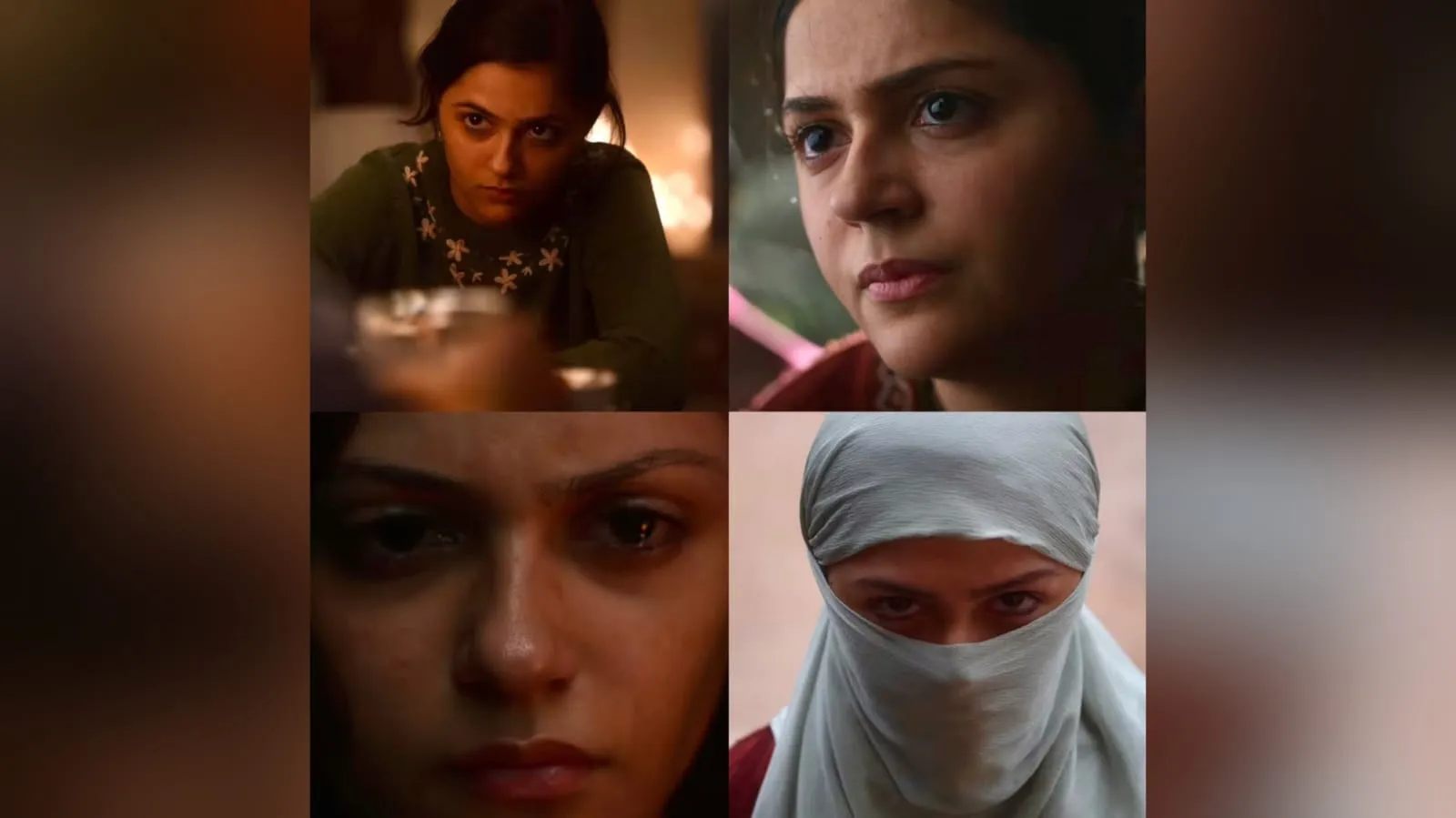
Some stories are watched and forgotten once the credits roll. Others make people talk long after an episode ends. Hunkkaar: The Roar seems to be finding a place in the second category.
The six-episode Hindi socio-thriller and courtroom drama, directed by Nitya Mehra and Karan D. Kapadia, premiered on September 25, 2026. The series follows 17-year-old Meenu Rawat, played by Aneet Padda, who accuses powerful spiritual leader Sunil “Baapji” Chakosi, played by Raghubir Yadav, of sexual assault. What follows is not just a fight inside a courtroom, but a larger battle involving faith, power, the police, the media and public opinion.
Hunkkaar Is Making People Look Beyond The Crime Story
At first glance, Hunkkaar may seem like another crime thriller built around a powerful godman and a young woman seeking justice. But the series keeps opening up into much bigger questions.
What happens when people trust a spiritual leader so deeply that questioning him itself feels wrong? What happens when a victim has to prove not just what happened to her, but also why she deserves to be believed?
These questions have made the series especially relevant to audiences who are already having difficult conversations around women's safety and justice in India.
The timing has also given viewers another reason to connect with the story. Recent protests by students and women in Delhi have once again brought issues of sexual violence, safety, victim-blaming and women's freedom into public discussion. Against that backdrop, viewers have been drawing their own connections between the conversations outside the screen and the questions raised inside Hunkkaar.
The series does not offer a simple answer. Instead, it puts the audience inside a system where faith, influence and justice constantly clash.
Meenu's Story Is Bigger Than What Happened To Her
One of the strongest parts of Hunkkaar is the way it presents Meenu. She is not written as a character whose entire identity disappears after the crime. She is angry, confused and sometimes rebellious, but she is also still a teenager trying to live her life. That becomes important when people around her begin judging the way she behaves after the incident.
Can a victim laugh? Can she go outside? Can she eat outside? Can she meet friends? Does looking normal mean that she is not traumatised?
Hunkkaar uses these moments to question the idea that there is a “right” way for a victim to behave.
The show also brings up the Nirbhaya case during its courtroom discussions, connecting Meenu's fight with the larger evolution of India's laws around sexual violence. The reference adds another layer to the story, reminding viewers that conversations around consent, sexual assault and justice have been shaped by cases that changed the country's legal and social discourse.
When A Series Becomes Part Of A Larger Conversation
This is perhaps where Hunkkaar has found its strongest connection with audiences.
The series is not simply asking viewers to decide whether they believe one character or another. It asks them to think about why people blindly trust certain individuals, why victims are questioned so often and why powerful people can sometimes make an entire system uncomfortable.
Audience reactions online have also reflected this connection. Viewers have described the show as gripping, powerful and emotionally difficult, while Aneet Padda's performance has received particular attention.
The series has also sparked conversations around its other central performances, including Raghubir Yadav's Baapji, Fatima Sana Shaikh's ACP Jasleen Singh Soin and Mohammed Zeeshan Ayyub's Advocate Bhalerao.
A Story That Asks Uncomfortable Questions
Hunkkaar may be a thriller, but its biggest impact comes from the questions it leaves behind. It asks whether faith should ever come without questioning. It asks why a victim's character is often discussed more than the crime itself. It asks how much pressure institutions can take before the pursuit of justice becomes another battle.
And perhaps most importantly, it asks what happens when an ordinary person decides to speak against someone who has spent years building an image that makes people believe he cannot be questioned.
That is why Hunkkaar is becoming more than just another OTT thriller. It has arrived at a time when conversations around women's safety, justice and accountability are already impossible to ignore, giving audiences another story through which to examine questions that remain deeply relevant.
Share This Article