



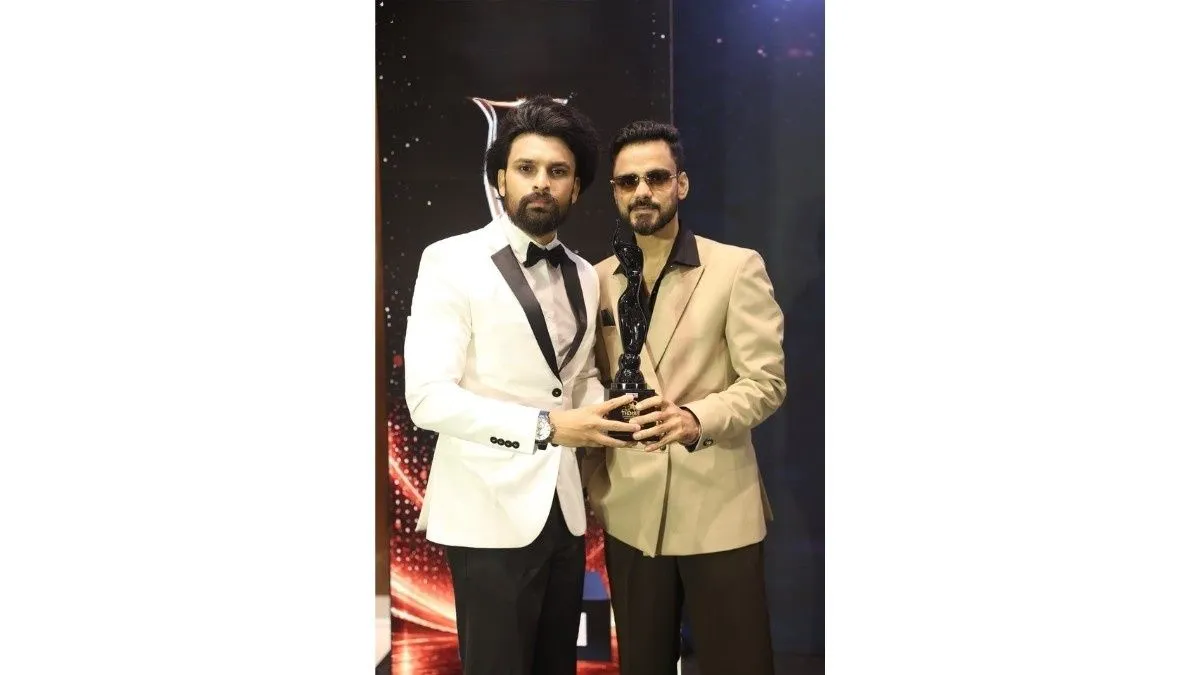
In this exclusive conversation, Ankkit Poddar and Abhijeet Shukla, Owners and Producers of Celestia Pictures, share the vision behind the studio's rapid rise, its content-first approach, and the philosophy driving its future across formats and platforms.
Q1. Celestia Pictures completed 6 projects in its very first month of operations. What has made this pace possible, and was it always part of the plan?
Ankkit Poddar:
When we set up Celestia Pictures, the vision was always to build a studio that moves at the speed of today's content market. We began with a clear creative direction, the right partnerships in place, and a team that understood what it means to execute at scale without compromising on quality. The 6 projects in our first month are not the result of rushing; they are the outcome of months of groundwork that went in well before the formal launch. We had already identified the stories we wanted to tell, the platforms we wanted to work with, and the talent we wanted to bring on board. So when we launched, we were ready to move.
For us, this pace is a natural reflection of how we intend to operate: with intent, clarity, and a genuine hunger to create meaningful content. Building momentum early was always part of the plan, and this is only the beginning of what we hope to achieve at Celestia Pictures.
Q2. Your debut slate features an impressive ensemble: Vikram Kochhar, Namit Das, Amrapali Dubey and Rani Chatterjee, among others. As a new studio, how did these associations come together, and what was your vision while bringing them on board for Celestia's first projects?
Ankkit Poddar:
For us, it was never about chasing big names, it was about finding the right actors who could bring authenticity and depth to the stories we wanted to tell. Every project under Celestia Pictures begins with the script, and once we know the emotional core of a character, we approach actors who naturally fit that vision.
We were fortunate that talented artists like Vikram Kochhar, Namit Das, Amrapali Dubey, Rani Chatterjee, and others connected with our storytelling approach and believed in what we are building. These collaborations weren't driven by the fact that we're a new studio or an established one; they were built on mutual trust, strong writing, and a shared ambition to create meaningful cinema.
From day one, our vision for Celestia Pictures has been to develop content that is commercially engaging while remaining creatively uncompromising. We want every project to have a distinct identity and lasting impact. This debut slate reflects that philosophy, bringing together diverse talent across industries and languages to tell stories that resonate with audiences not just in India, but globally.
Q3. You have chosen to shoot content in both vertical and horizontal formats simultaneously. Most producers would see this as a significant undertaking. Why was this a priority from day one?
Ankkit Poddar:
The way audiences consume content is changing faster than most of the industry is willing to acknowledge. Mobile-first viewing is already the dominant format for a large section of the audience, and connected televisions are now evolving to support vertical content as well. If you are building a studio for the next decade, you cannot afford to think in only one format. That is why we made a conscious decision to shoot in both vertical and horizontal formats from the very beginning. It is a more involved production setup, but we see it as an investment in the long-term relevance of our content. It allows us to meet audiences wherever they are, whether that is on a phone, a laptop, or a large screen, without ever having to rework a project after the fact. For us, this is not just a technical choice; it is a reflection of how we think about the future of storytelling and consumption.
Q4. Celestia is producing web series for Rocket Reels and regional feature films for Shujay Music World, while also developing a big-budget theatrical feature. How do you think about managing such a wide range within the studio's first year?
Ankkit Poddar:
Each format we work in serves a different audience and a different purpose. Web series are about building a consistent content rhythm and reaching audiences on digital platforms where they spend much of their time. Regional feature films are about connecting with audiences in their own language and storytelling tradition, which is something we deeply respect. And the theatrical feature is about the larger canvas, where we want to make a statement about what Celestia Pictures is truly capable of at scale. Rather than seeing this range as a challenge, we see it as the very foundation of what we are building. We want Celestia to be a studio that is relevant across formats and audiences, not confined to a single lane. Managing this range comes down to strong systems, the right partnerships, and a team that believes in the vision. When your foundation is clear, breadth becomes a strength rather than a stretch.
Q5. Before stepping into production at this scale, you spent over a decade mentoring thousands of professionals, including sessions at institutions like IIM Kozhikode. How has that experience shaped your instincts as a producer?
Ankkit Poddar:
Mentorship, at its core, is about recognising potential and creating the right conditions for it to flourish. That is not very different from what a producer does every day. You are constantly working with people, understanding what they bring to the table, and figuring out how to draw the best out of them. Having spent over a decade doing exactly that across industries and institutions, I approach production with a people-first sensibility. I have learnt that when talent and teams feel genuinely supported and understood, the quality of the work reflects it almost immediately. That experience also taught me patience, the ability to listen, and the importance of backing people with conviction. As a producer, those instincts help me build relationships that go beyond a single project. I do not see the people I work with as resources for one film; I see them as long-term collaborators. That mindset is something I carry into everything we do at Celestia Pictures.
Q6. You bring a business background spanning healthcare, technology and design into an industry where most producers come from within. How does that perspective shape the way you run Celestia Pictures?
Ankkit Poddar:
My journey has been a blend of business, creativity, and entrepreneurship. As an alumnus of IIM Bangalore, I was trained to think strategically, build scalable businesses, and solve problems with innovation. My experience across healthcare, technology, and design further reinforced the importance of systems, efficiency, and long-term value creation; principles that I now bring into filmmaking.
At the same time, I'm also an actor, and that has given me a deep appreciation for the creative process. Having experienced storytelling from an actor's perspective, I understand the emotional investment that goes into every performance and the importance of creating an environment where artists can do their best work.
I believe the future of filmmaking lies at the intersection of creativity, technology, and business. At Celestia Pictures, we're building a studio that combines artistic excellence with disciplined execution, embraces emerging technologies like AI where they add value, and approaches every project with both creative ambition and commercial clarity. My goal is to create a production house that's not only known for compelling stories, but also for building a sustainable and future-ready entertainment business.
Q7. Having spent over a decade working closely with the business and legal frameworks that shape the entertainment industry, what was the opportunity you saw that led you to co-found Celestia Pictures?
Abhijeet Shukla:
For over a decade, I've had the privilege of working with producers, artists, studios, investors, and creators, helping them navigate the legal and business complexities of the entertainment industry. That journey gave me a front-row seat to how films and content are actually built not just creatively, but commercially. I realized that many great ideas never reached their full potential because they lacked the right structure, planning, or long-term vision. Too often, legal and business decisions were treated as an afterthought instead of being part of the creative journey from day one.
That realization stayed with me and eventually led to the creation of Celestia Pictures. I wanted to build a company where creativity and strategy could exist together, where storytellers felt supported not only artistically but also professionally. For me, producing isn't just about making films, it's about creating an environment where talented people can focus on telling meaningful stories while knowing the business, legal, and financial aspects are being handled responsibly. Celestia Pictures is my way of bringing together everything I've learned as a lawyer, entrepreneur, and someone who genuinely believes that great storytelling deserves a strong foundation to thrive.
Q8. Celestia Pictures' tagline is "Where Great Stories Find Their Light." With more projects in the pipeline and a two-part feature in development, what kind of stories is Celestia ultimately looking to tell?
Ankkit Poddar:
We want to tell stories that are made with genuine craft and genuine intent. Every project we take on has to have something real at its core, whether it is a vertical series meant for a few minutes of viewing or a big-screen theatrical release. The question we ask ourselves is always the same: does this story deserve to be told, and are we the right people to tell it? Our tagline, Where Great Stories Find Their Light, is not just a line; it is a promise. There are so many powerful stories that never find the right platform or the right backing, and we want Celestia to be the place where those stories are given the space to shine. Whether it is regional cinema, digital series, or ambitious theatrical films, our goal is to tell stories that stay with audiences long after they have watched them.