
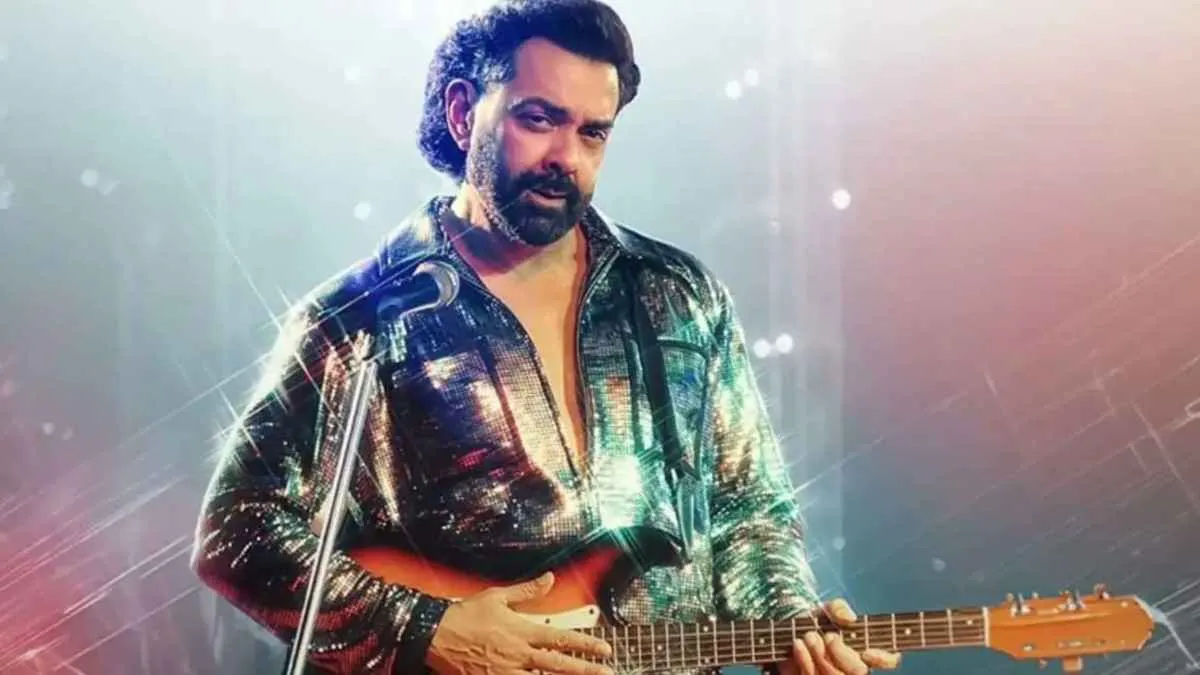
Before you step into Bandar, know this: this isn't a fast-paced thriller or a courtroom drama built around shocking twists. It's a dark, uncomfortable look at what happens when a person gets trapped inside a system that seems determined to break them. Anchored by one of Bobby Deol's finest performances, Anurag Kashyap's latest film is gripping, messy, thought-provoking and frustrating all at once.
Bandar Review
Director: Anurag Kashyap
Cast: Bobby Deol, Sanya Malhotra, Saba Azad, Sapna Pabbi and others
Where To Watch: In Theatres
Runtime: 2h 20m
Rating: 2.5/5 Stars
1. Plot Details
Bandar follows Samar Mehra (Bobby Deol), a once-popular actor and singer whose glory days are far behind him. His career is fading, money is tight, and loneliness has quietly become part of his everyday life.
Things take a dramatic turn when a former girlfriend accuses him of rape. Samar insists he is innocent and claims the relationship was consensual. But once the legal machinery starts moving, truth becomes less important than perception.
What follows is not a typical "did he or didn't he" story. Instead, the film focuses on Samar's journey through police stations, courtrooms and prison cells as he struggles to survive a system that seems to have already decided who he is.
The conflict is simple yet powerful: can a person hold on to their identity when every institution around them is determined to strip it away?
2. Script Analysis
Bandar feels both fascinating and frustrating. The premise appears fresh because it explores the emotional and psychological toll of being trapped inside the justice system rather than focusing purely on the legal case. The film raises difficult questions about public shaming, power, privilege, false accusations and accountability.
The first half is gripping. The writing keeps you invested as Samar's life slowly unravels. Every new humiliation feels painful and believable. However, the second half loses some momentum. The film keeps revisiting the same ideas without adding enough new layers. The prison sequences remain powerful, but the narrative starts running in circles.
The biggest issue is perspective. While the script wants to explore moral grey areas, it gradually shifts heavily toward Samar's suffering. The woman at the centre of the accusation becomes more of a plot device than a fully developed character. As a result, several complex questions are raised but not explored deeply enough.
The story definitely has weight. It never feels trivial. But it doesn't always trust its audience to sit with ambiguity.
3. Performances & Execution
Bobby Deol absolutely owns this film. This is one of those performances where the actor disappears into the character. He captures Samar's fear, confusion, anger and helplessness without ever making him completely sympathetic or completely unlikeable.
Sapna Pabbi delivers a strong performance as Gayatri. She brings unpredictability and emotional intensity to a character that deserved much more screen time and development. Sanya Malhotra and Saba Azad are both effective in supporting roles, while Jitendra Joshi stands out as a sharp and intimidating police officer.
The prison inmates also leave a strong impression. Indrajith Sukumaran, Raj B Shetty, Natesh Hegde and several others create an atmosphere that feels genuinely dangerous and unpredictable.
As a director, Anurag Kashyap succeeds in making viewers uncomfortable. The emotional impact lands hardest during the prison scenes, where dignity becomes a luxury nobody can afford.
4. What Works & What Doesn't
What Works
- Bobby Deol's powerful and emotionally layered performance.
- A gripping first half that pulls you into Samar's nightmare.
- Disturbing prison sequences that feel authentic and unsettling.
- Strong supporting cast performances.
- Thought-provoking themes about justice, public perception and identity.
- Several haunting moments that stay with you long after the credits roll.
What Doesn't
- The second half feels repetitive.
- The female characters deserved more depth.
- The narrative leans too heavily toward one perspective.
- Important moral questions are raised but not fully explored.
- Uneven pacing reduces the impact of some emotional moments.
- The film occasionally chooses discomfort over meaningful insight.
5. Technical Aspects
Bandar is not a visually flashy film, but that works in its favour. The cinematography creates a bleak, claustrophobic atmosphere. The prison feels crowded, dirty and suffocating. You almost feel trapped alongside the inmates.
The production design deserves praise for making every location feel lived-in and oppressive. Whether it's the jail cells or interrogation rooms, nothing looks glamorous. The sound design quietly does heavy lifting. The noise, chaos and constant tension inside the prison add to the feeling of psychological exhaustion.
Editing is a mixed bag. The first half moves with urgency, but the second half could have benefited from tighter pacing. The background score remains restrained and allows the performances and situations to take centre stage.
6. Final Thoughts
Bandar is a film with big ambitions and even bigger questions. It examines how easily a person can be swallowed by institutions, public opinion and legal processes.
While the film doesn't always handle its themes with the nuance they deserve, it remains compelling because of its atmosphere, performances and emotional intensity. It may not fully succeed, but it certainly leaves an impression.
One-liner Verdict:
"Bandar locks you inside its cage, but forgets to hand over all the keys."
7. Should You Watch It?
Yes, but with expectations in check. If you enjoy prison dramas, character-driven stories and morally complicated films, Bandar offers plenty to think about. Bobby Deol's performance alone makes it worth watching.
However, viewers expecting a tightly written legal thriller or a balanced exploration of its themes may leave wanting more.