


Ramayana Part One Review: A Feast For The Eyes, If Not Quite The Heart
Read our Ramayana: Part One review to find out how Yash, Ranbir Kapoor and Sai Pallavi fare in Nitesh Tiwari's ambitious retelling, which impresses visually but struggles to deliver emotional depth.





0
0
0
0
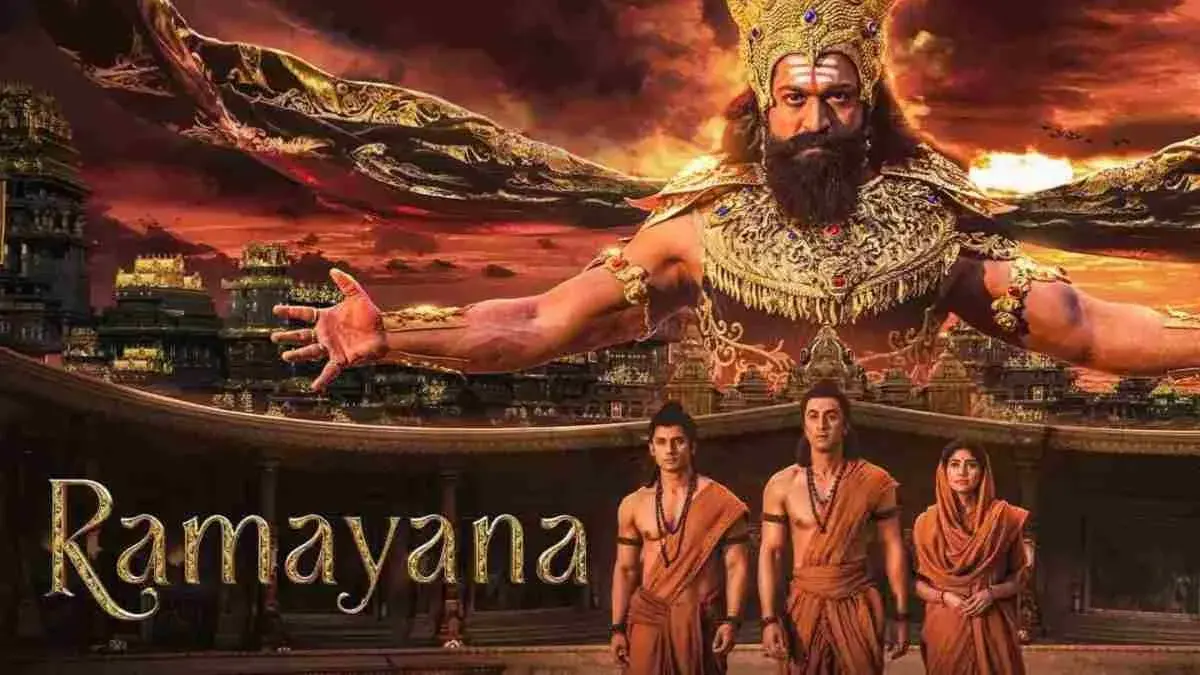
Photo :X
For generations, the Ramayana has lived through stories, television adaptations, paintings and countless retellings. Its appeal lies not just in the battle between good and evil but also in the human choices, relationships and sacrifices behind it. Nitesh Tiwari's Ramayana Part One brings this familiar epic to an enormous cinematic canvas. There is plenty to admire in its visual ambition, but the spectacle occasionally gets in the way of the story it wants to tell.
Ramayana Part One: An Epic Story, Told Like A Grand Adventure
The film begins by exploring Ravana's origins, his devotion to Shiva and his rise as the ruler of Lanka. His growing power and ambitions eventually set the stage for the arrival of Rama, the incarnation of Vishnu. Born to King Dashrath of Ayodhya, Rama grows up alongside his brothers before meeting Sita and marrying her after breaking the mighty bow Pinak.
The story then moves through the events that change Rama's life. Kaikeyi's demand for Bharat's coronation sends Rama into a 14-year exile, with Sita and Lakshman accompanying him. The journey includes several familiar episodes, such as their encounter with Surpanakha, Sita's abduction and Jatayu's attempt to rescue her. By the end, the film has laid the groundwork for the larger conflict that awaits in the sequel.
Tiwari has a difficult task in adapting a story that audiences already know by heart. His decision to give Ravana's backstory considerable attention adds an interesting angle to the familiar narrative. The problem is that the screenplay often moves from one famous episode to another without giving their emotional consequences enough time to register. At nearly 195 minutes, the film has plenty of room to explore its characters, yet several important relationships remain surprisingly thin.
The storytelling occasionally resembles a fantasy adventure game, with new challenges, mythical creatures and battles appearing at regular intervals. That approach makes the film accessible to younger audiences, but it also takes away some of the epic's philosophical weight. The writing by Tiwari and Shreyas Jain could have done more with the characters' conflicting emotions. Manthara's influence over Kaikeyi, for instance, lacks convincing motivation, while Bharat's devotion to Rama never gets the emotional attention it deserves.
Yash Commands Lanka, Ranbir Kapoor Struggles In Ayodhya
If there is one actor who consistently brings energy to the film, it is Yash. His Ravana has the arrogance of a powerful ruler and the devotion of a committed Shiva bhakt. He carries himself with authority, and his elaborate tandav sequence is among the film's most engaging moments. Even when the character's screen presence becomes repetitive, Yash keeps his performance lively through his expressions and commanding delivery.
Ranbir Kapoor faces a different challenge as Rama. The actor brings a calm presence to the role and looks convincing in the film's carefully constructed visual world. However, his performance feels restrained to the point of stiffness. Rama's goodness is clear, but the writing and performance rarely reveal the emotions beneath that ideal image. His scenes needed more warmth and vulnerability to make the character feel like a person rather than an embodiment of perfection.
Sai Pallavi fares better as Sita. She brings grace to the character without making her entirely passive. Her sword-wielding moments offer a glimpse of Sita's strength, while her interactions with Rama add some warmth to the film. However, the film does not fully explore the couple's relationship, and some of Sita's emotional reactions feel underplayed.
Ravie Dubey makes Lakshman more approachable through his frankness and occasional sharp remarks. He provides welcome relief from the film's otherwise solemn atmosphere. Vivek Oberoi gets limited screen time but makes an impression as Vidyutjihva. Rakul Preet Singh brings energy to Surpanakha, although the character deserves more attention.
Lara Dutta and Sheeba Chaddha have important roles in setting the story's events in motion, but neither gets enough material to make a lasting impact. Kajal Aggarwal's appearance is even more limited. Shobana makes a strong impression as Kaikashi, while several other supporting characters struggle to rise above their brief appearances.
The Visuals Are Divine, The CGI Isn't Always
The biggest attraction of Ramayana: Part One is undoubtedly its visual scale. Ayodhya, Lanka and the celestial worlds give the film an expansive look. The production design creates a sense of grandeur, while the cinematography by Pankaj Kumar and Mahesh Limaye captures both the beauty and darker corners of this mythical setting.
The celestial sequences are particularly impressive. The film also delivers during its larger action moments, especially the confrontation involving Ravana and Jatayu. However, not every visual effect looks equally convincing. Some creatures appear artificial, and a few computer-generated characters lack the detail needed to blend naturally into their surroundings.
The editing could have been sharper as well. Several episodes feel longer than necessary, and the transitions between important events occasionally make the film feel like an illustrated summary of the epic. A tighter narrative would have given the emotional moments more room to breathe.
AR Rahman And Hans Zimmer Make An Uneven Musical Pair
The collaboration between AR Rahman and Hans Zimmer sounds exciting on paper. Unfortunately, the result does not always match expectations. Some of Rahman's melodies feel familiar, while Zimmer's background score occasionally becomes too loud and intrusive. Instead of strengthening every emotional or dramatic moment, the music sometimes competes with the action on screen.
Ravana's tandav sequence benefits from its musical treatment, but the film needed more memorable compositions elsewhere. A story with such a strong devotional and emotional foundation deserved a soundtrack that could stay with audiences long after the credits rolled. Here, the music rarely reaches that level.
Final Thoughts
Ramayana: Part One has enough visual ambition and star power to make its theatrical experience worthwhile. Yash delivers a memorable Ravana, Sai Pallavi brings grace to Sita, and the production design gives the epic a scale that Indian cinema rarely attempts. However, the film's uneven screenplay, underdeveloped supporting characters and inconsistent music keep it from becoming the complete cinematic experience it promises.
There are moments when Tiwari's vision comes alive, particularly when the film explores Ravana's ambition and devotion. Yet the emotional heart of the Ramayana often gets lost beneath the action and visual effects. Ranbir's restrained portrayal of Rama also leaves the central hero less compelling than he should be.
The film should appeal to audiences looking for mythological spectacle, elaborate action and a familiar story presented on a massive canvas. Those expecting the emotional depth and timeless wisdom of the epic may find themselves wanting more.
Ramayana: Part One is a visual treat with enough memorable moments to make the journey worthwhile. It may not touch the heart as deeply as it pleases the eyes, but there is still plenty to admire in Tiwari's ambitious retelling.
Rating: 3/5 stars.
Share This Article