
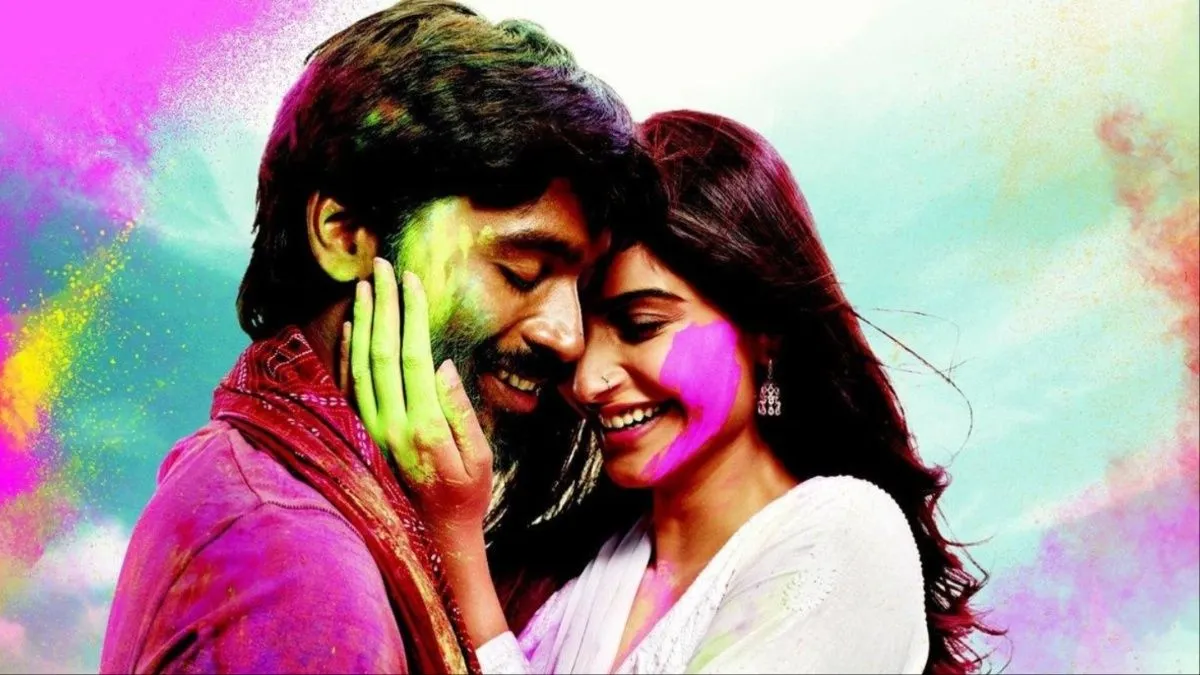
The 2013 film Raanjhanaa returned to screens with a twist no one expected. Released on August 1, 2025, by Eros International as Ambikapathy in Tamil, the film featured an AI-generated alternate ending. This time, Kundan (played by Dhanush) survives instead of dying, which is a major change from the original tragic climax that made the movie a cult favourite.
Surprisingly, this ending was made without asking the film’s director or lead actor.
Raanjhanaa AI Ending Sparks Outrage
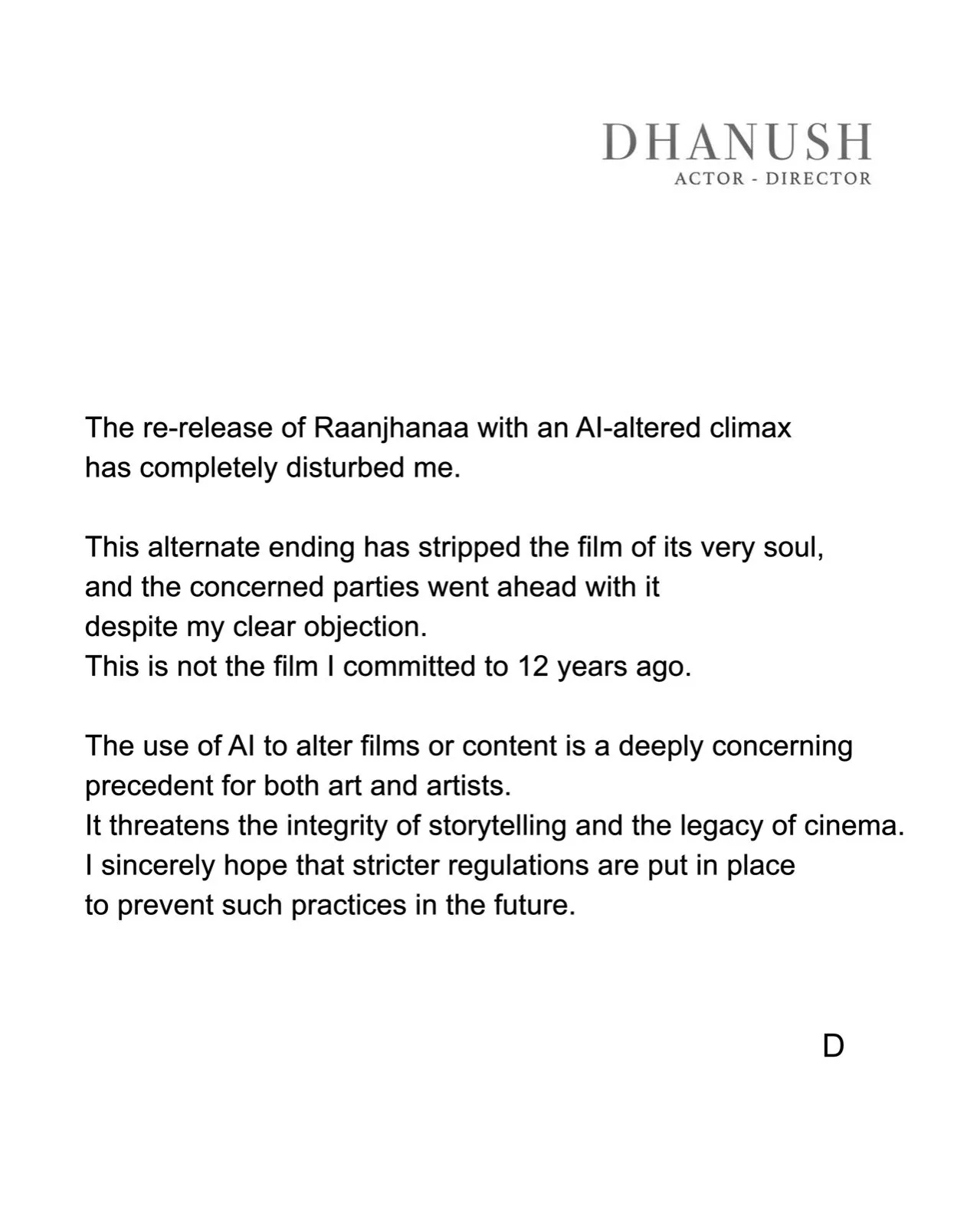
Director Aanand L. Rai called it a “reckless takeover.” He said the story was “shaped by human hands” and should have stayed that way. Dhanush also didn’t hold back. He said the AI-made ending “stripped the film of its very soul.” Both were upset that they weren’t even consulted.
Still, the internet had mixed feelings. Some fans were happy to see a “satisfying closure” and said things like “My Kundan is alive.” But others felt the soul of the film was lost.
How AI is Changing Filmmaking
AI isn’t just writing alternate endings; it’s changing the entire film industry.
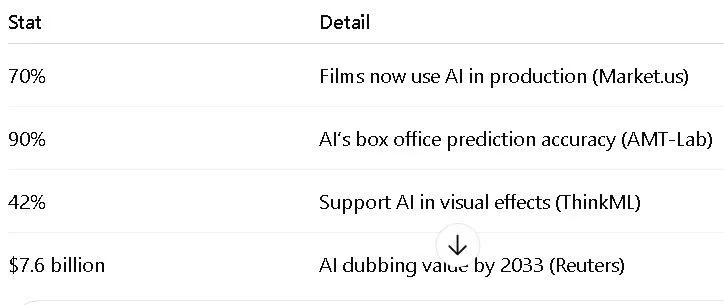
As reported by arXiv and IJRPR, AI can now scan thousands of movie scripts to find what works best in storytelling. It helps writers build plots, suggest better dialogues, and even auto-generate scenes. According to AMT-Lab, 29% of audiences are okay with AI-written scripts. ThinkML says AI can cut down production time a lot.
AI is also changing casting. It studies actors’ past roles, facial expressions, and even speech to recommend who should play what. Dubbing is getting an AI makeover, too, with cloned voices now used for background characters.
And in post-production? AI is everywhere. Market.us says 70% of films now use AI for editing, CGI, and visual effects. AI even makes water, fire, and battle scenes more realistic and cheaper. It can also predict how well a film will do at the box office, with 90% accuracy, according to AMT-Lab.
Will AI Replace Actors?
Not yet—but it’s getting close. That’s what worries many.
In Europe, voice actors are protesting. AI dubbing is eating into their work. Reuters says this dubbing market will grow from $4.3 billion in 2025 to $7.6 billion by 2033.
In Hollywood, things are heating up. Studios are creating digital clones of actors. The SAG-AFTRA union is concerned. As reported by Wired, 14% of the union’s board opposed a deal because of fears that AI would replace background actors without consent. Time also flagged concerns over AI reusing actors’ voices and faces without asking.
Why Raanjhanaa AI Ending Crossed A Line
Many people feel that changing Raanjhanaa’s ending with AI went too far. Dhanush said that the original ending gave the film its emotional power, and the new version takes that away. Neither Dhanush nor director Aanand L Rai were informed about this AI change. This raises a serious question: Who truly controls a film’s legacy?
There’s also concern that this could set a dangerous trend. Using AI to change stories without the creator’s permission can break trust between artists and studios. Some critics even believe this wasn’t about improving the film at all. Instead, they see it as a clickbait move, meant to grab headlines and revive buzz around an old hit.
Stats That Show The AI Boom In Films
In conclusion, AI in filmmaking isn’t all bad. It makes things faster, cheaper, and more efficient. But when studios use AI to change stories without asking the original creators, it crosses a line. Filmmaking is an art form. And art, at its core, is human. If we let machines rewrite stories for clicks or cost-saving, we may lose the very soul of cinema.
Stay tuned to The Filmy Charcha for more updates!