



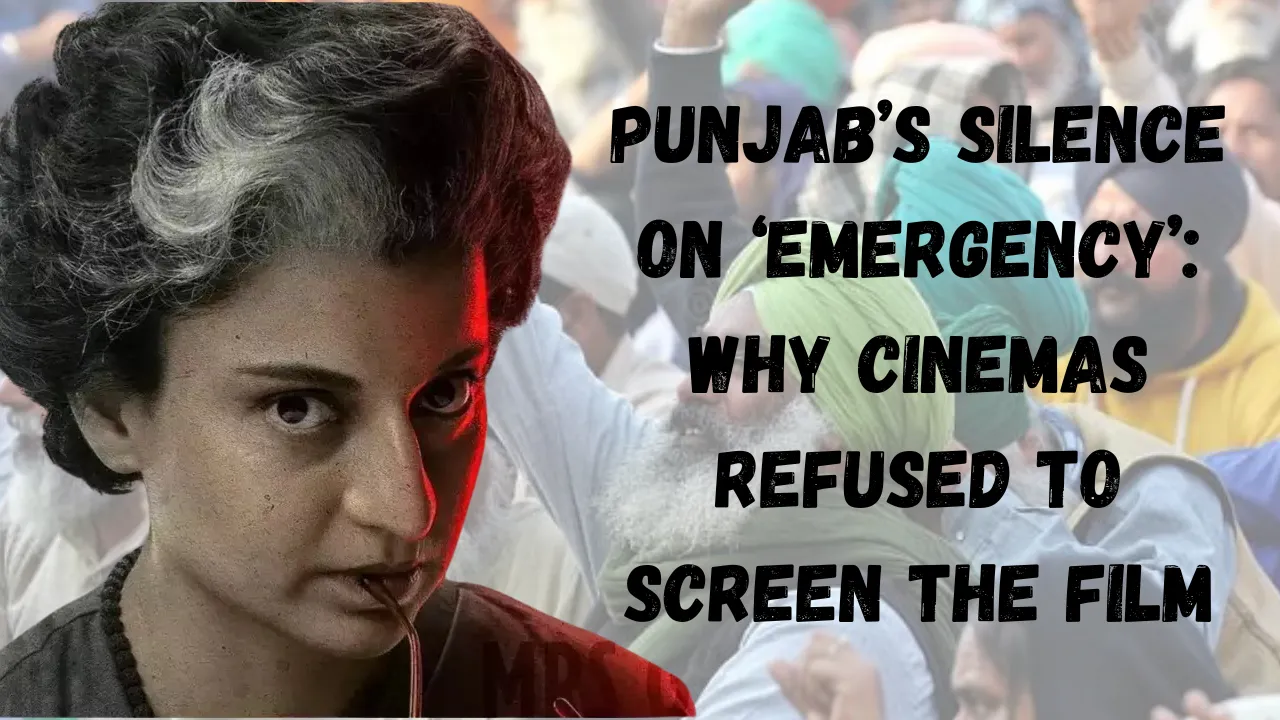
India ( 17 January, 2025 ): On January 17, 2025, Kangana Ranaut’s political drama Emergency was released across India. However, in Punjab, not a single cinema decided to screen it. Despite being cleared by the Central Board of Film Certification (CBFC), the film faced protests from Sikh activists, leading cinema owners to take a step back.
The Call for a Ban from Sikh Groups
Shiromani Gurdwara Parbandhak Committee (SGPC) president, Harjinder Singh Dhami, sent a letter to Punjab Chief Minister Bhagwant Mann, urging him to ban the movie. The SGPC argued that Emergency could hurt Sikh sentiments, especially since it portrayed the emergency period from 1975-77. This move ignited a wave of protests across the state.
Government’s Stand on the Issue
According to government officials, the Punjab government did not issue an official ban on Emergency. The Chief Minister has not yet taken any action, and there is no state policy for banning films. The decision was left to cinema owners, many of whom chose to avoid screening the film, fearing protests and a potential law-and-order situation.
Why Cinemas Stayed Away
The decision not to screen Emergency was made by cinema hall owners themselves. While there was no direct government ban, the fear of protests from Sikh groups led them to cancel screenings. In Jalandhar, Amritsar, and Bathinda, protests disrupted movie bookings, forcing cinema halls to cancel the film. Heavy police presence was deployed at malls and cinema halls in these areas to maintain peace.
The Controversy Surrounding the Film
Emergency, where Kangana plays former Prime Minister Indira Gandhi, centers on the controversial 21-month period of emergency rule. The film’s portrayal of political events and its alleged misrepresentation of the Sikh community has sparked heated discussions. Sikh organizations have accused the film of political bias and deliberate distortion of history.
Protests in Major Cities
In cities like Amritsar, Jalandhar, and Mohali, large protests erupted outside multiplexes. Sikh activists claimed that Emergency deliberately twisted historical facts for political gain. The protests grew so intense that many cinemas decided against screening the film, even though it had been scheduled for release.
Punjab Congress Chief Speaks Out
Amarinder Singh Raja Warring, Punjab Congress chief, also weighed in on the controversy. He criticized Emergency for its portrayal of events and argued that films like these only serve to create division. He expressed concern that the movie could harm the unity and brotherhood among different communities in the country.
A Deeper Look at the Protests
The Sikh activists’ protests were fueled by past grievances, including Kangana’s comments on the farmers' protests in 2020. Her remarks had angered many Sikhs, and these protests were a result of that longstanding tension. In Bathinda, the protests led to cinemas refunding tickets and canceling screenings, further intensifying the situation.
The History of the Emergency Period
The Emergency period of 1975-77 remains one of the most controversial chapters in India’s history. It saw the suspension of civil liberties and the centralization of power under then Prime Minister Indira Gandhi. While many see it as a necessary measure during a time of national crisis, others view it as an abuse of power. Emergency as a film seeks to portray this tumultuous time, but its accuracy and portrayal have come under heavy scrutiny.
The National Debate on Censorship and Freedom of Expression
This issue raises questions about censorship and the role of cinema in reflecting historical events. While Emergency was granted a censor certificate, its release has sparked a national debate on how films should handle sensitive topics, especially when it involves the portrayal of communities or historical events.
The Future of Emergency in Punjab
It remains to be seen whether Emergency will ever be shown in Punjab. Despite the protests, the film has been released in other parts of India, and cinema owners in other states have not faced the same level of backlash. However, the situation in Punjab highlights the power of local activism in shaping what films are seen by the public.
The Broader Impact on Indian Cinema
The refusal to screen Emergency is not just a local issue—it has broader implications for the film industry in India. It shows how sensitive political content can lead to widespread protests, and how cinema owners often choose to avoid controversy. The situation also reveals the deep divide over the portrayal of historical events and figures in Indian cinema.
A Film Caught in the Crossfire
In the end, Emergency is a film that is caught in a whirlwind of political, cultural, and historical disputes. Whether it will ever be shown in Punjab or face more challenges in other regions is uncertain. However, its release has already ignited a debate that will continue to shape the way films tackle sensitive topics in India.
